Showing posts with label norman carr. Show all posts

Friday, April 26, 2013

Luangwa Safari House


Luangwa Safari House


In Zambia, we encountered death in the afternoon not twenty minutes from Mfuwe Airport, in the form of a family of hyenas gnawing on a buffalo carcass.


But our welcome at Luangwa Safari House was all civilized gentility. Khaki-uniformed staff greeted us with chilled hand towels and fruit juice cocktails.


Elephants were padding down to the lagoon next to the house, including a baby so young it fit beneath its mother’s belly and tripped over its own trunk. When the elephants were finished, a dazzle, or herd, of plains zebra took a turn, followed by a journey of Thornicroft’s giraffe and a sounder of warthogs.


The cheeky baboons hadn’t yet learned their manners. When we got up from the outdoor lunch table to look at some ground hornbills, an adolescent baboon leapt onto the deck and snatched a butter ramekin, racing away to lick the contents like a guilty child with a stolen cookie jar.


Luangwa Safari House was the brainchild of Jo Pope, wife of the legendary Zambian walking safari guide Robin Pope. The couple realized that their own fully walled three-room residence—with its pool and terrace overlooking the Luangwa River—would be ideal accommodations for parents of young children anxious about the wilderness setting. But while perfectly comfortable, their house wasn’t quite luxurious enough for style-conscious sorts wanting privacy from the main lodge, so Jo Pope hired Neil Rocher, a South African former guide who had launched a second career designing boutique safari lodging.


For Luangwa Safari House, Rocher set twenty-five leadwood tree trunks into the concrete foundation of a “grove” and built walls that followed the tree branches’ flowing curves. The stone-walled front entrance looks like a castle, with two rounded turrets topped by a witch’s hat–shaped thatched roof. A huge, asymmetrically planked front door pivots open to reveal a living room soaring under a 40-foot ceiling and completely open at the back, leading the eyes straight to the landscape and an ever-changing wildlife tableau.


The wraparound deck at Private Camp. Except for mealtimes, when a chef and butler are on hand, guests have the complex to themselves.


From the four bedrooms I selected an upstairs suite that had a drawbridge-style balcony overlooking the lagoon. The Diva took a ground-floor room with a polished copper tub. “Please refrain from taking your siesta outside by the pool,” our hostess, Irene Hinaran, had warned during the house tour. “There are wild animals here, and they will eat you.” At dusk staff blocked off walls and windows with grates that allowed us to see outdoors, while keeping monkeys and larger animals (but not bats) at bay.


During dinner, the maĆ®tre d’ interrupted our beef and mushroom stew with a stage whisper: “Excuse me, mesdames, but something is happening to the moon.” A lunar eclipse was under way, and we broke the do-not-under-any-circumstances-leave-the-house-after-dark rule to join the kitchen gang watching a full moon turn a smoldering earthworm-pink, as if it had molted into a still-furled, newborn creature.


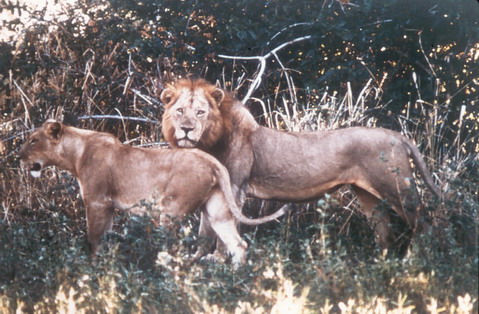
In the night, I heard the rumbling “hunnhh, hunnhh” of two male lions calling. I knew from experience that safari newbies fall into two categories: people who think wild animals exist to be photographed, and those who become seized by primeval fear. “Susan, I don’t think I can do this,” The Diva said, clawing my arm when Kanga Banda, our game guide turned up the next morning to lead our half-day walking safari. A 30-year-old Zambian dead ringer for Chris Rock, he cajoled her into a pontoon boat across the slow-flowing Luangwa River. We were met by the ranger and a four-by-four vehicle on the opposite bank inside the park and drove to a plain where some female puku antelopes were grazing, stalked by a nervous, rutting male with swept-back spiral horns. The guide parked under a tree; no lions in sight, we got out and walked single file into the bush, me dressed in insect repellent–impregnated khakis, The Diva exposed to tsetse flies in strapless Lululemon yoga gear. I’d been looking forward to getting up close to at least a few of the park’s 60 mammal species and 400 bird species, but to calm my friend’s nerves I said we’d be happy just to walk for a little while and look at plants and insects.


Norman Carr, Zambia’s original walking safari guru and Robin Pope’s mentor, earned fame for safely guiding clients within pouncing distance of lions and leopards and within stomping and goring distance of elephants, black rhinos, and African buffalo. 

To build up The Diva’s confidence, we played chicken with an ant lion—the larva of a dragon-type fly—gently poking a twig into the inverted cone of its sandy trap; we were rewarded by the sight of pincer jaws, monstrously out of proportion to the larva’s body, snapping at what it thought was an ant. On our “Little Five” safari, we spotted the buffalo weaver (a bird) but struck out on the rhinoceros beetle, leopard tortoise, and the elephant shrew.


During a late-afternoon game drive, The Diva had her first big cat encounter when we followed baboon alarm calls and found the agitated troop high in mopane tree branches. On the ground, three large males bared their teeth and mock-charged a young female leopard. She turned, paused oh so casually, and climbed a termite mound to glare down at us all. Leaving the spotted princess, we proceeded to the riverbank for sundown aperitifs.


In the middle of our last night in Zambia, The Diva was awakened by the noise of tearing branches and made out through the screens of her room the immense silhouettes of elephants using their trunks to strip leaves. “The sound of their breathing was like a giant purr,” she marveled to me later. Instead of reaching for her emergency whistle, she had parted the mosquito netting, gotten out of bed, and peered into the dark with her nose against the screen. “Those sounds were so delicious in the darkness that my conservative instincts were overcome with curiosity,” she admitted. Perhaps the animals with night vision were equally transfixed. In the middle of the equivalent of a lighted window, The Diva stood, onstage, in their jungle.


Excerpted from an article by Susan Hack


Thursday, October 4, 2012

Norman Carr Safaris Offers Discount to Zambia’s South Luangwa Valley


In order to promote travel to Zambia’s South Luangwa Valley in the green season, Norman Carr Safaris (NCS) is offering “Elephants Never Forget” to all past guests. The promotion features a discount of 15 percent on a seven-night safari. Guests will stay at NCS’ flagship Kapani Lodge (or, from March 1, at Chinzombo, the first wildly luxurious, sustainable safari accommodation in the Luangwa Valley), and at Kakuli, the only true bush camp open in the green season.

  To qualify for the discount, at least one member of the party must have stayed with NCS sometime in the past. When booking, you must submit names and dates of prior visit, so NCS can verify. The offer only applies to the seven-night Rivers and Rainbows safari, which runs from Jan. 15 to April 5 and is subject to availability. Once new guests have stayed with NCS, they will also qualify for the 15 percent discount on future Rivers and Rainbows safaris.

The green or emerald season of the South Luangwa is characterized by magnificent sunsets and skyscapes, a myriad of migratory birds, crystal-clear night skies and occasional dramatic tropical downpours, making it a dream for photographers, birders, wildlife lovers and adventurers. South Luangwa National Park is considered one of the greatest wildlife sanctuaries in the world:

For more information on Africa, visit Sell Africa Travel.

Sunday, September 23, 2012

Kapani and history of the company


Kapani and history of the company

Norman Carr established Luangwa's first safari camp in 1950. Back in the days when an African safari was a hunting experience, Norman developed the pioneering idea of taking people to look at animals and photograph them rather than to shoot them.

This first safari camp was set up in partnership with the then Paramount Chief Nsefu and his people. This idea of involving the local people in the management of the wildlife was way ahead of its time. It was almost 50 years later that conservationists started developing the principles of "Community Based Natural Resource Management", in other words encouraging the traditional owners of the natural resource to take responsibility for its usage. Norman Carr's pioneering approach proved to be the forerunner to a cornerstone of modern day conservation policy.

The first 35 years of the company saw Norman set up and establish a number of safari camps across the Luangwa Valley, some of which are still in existence – Nsefu, Lion Camp, Chibembe and Chinzombo to name a few. In 1985 whilst running his safaris out of the old Mfuwe Lodge, Norman started construction on what would be his final safari camp, Kapani Lodge. He selected an elevated site overlooking the Kapani Lagoon. He knew the unpredictability of the Luangwa River well, and that this site would never flood and would never fall into the river.

Everyone associated with Norman Carr Safaris (NCS) is immensely proud of the heritage of the company. The principles of conservation and community responsibility established by Norman over half a century ago still run strongly through the company. We have been leading the way in responsible tourism in Zambia for over 60 years and we intend for that to continue.

In early 2012 we announced our new partners – the Dalais family and Chongwe Safaris in the Lower Zambezi – who along with co-owners and Directors Dave Wilson and Christina & Adrian Carr are pleased to share the next chapter of the Norman Carr Safaris adventure.

Throughout its history, NCS has always innovated; the first community based tourism, the first camps, the first walking safaris, the first community projects, the first luxury bush camps, the first all Zambian expert guiding team, the first Zambian female guide, the first majority Zambian Operations Board - the list of firsts is long!

We’re proud to continue this tradition and will continue to lead the way in innovation, the use of new ‘green’ technology, staff training and development and community involvement.

For Norman Carr Safaris, it has always been and continues to be all about CONSERVATION THROUGH TOURISM.

Original: http://www.normancarrsafaris.com

And a picture gallery: http://www.normancarrsafaris.com/#!/gallery/Camps/Kapani


Wednesday, September 19, 2012

Norman Carr Safaris receives recognition


Norman Carr Safaris receives recognition at the first SATOA Travel Awards

by Philly Denlegh-Maxwell
Many congratulations to Norman Carr Safaris, whose family friendly Kapani Lodge received recognition at the inaugural SATOA Travel Awards. Kapani received the ‘Best Accommodation in Africa’ award at the event, which took place at the Zimbabwe Embassy on Wednesday 12 September.
Honour Schram de Jong accepted the award on behalf of the team at Norman Carr Safaris.


Kapani Lodge is a comfortable family lodge situated on the banks of one of the Luangwa River’s many ox-bow lagoons. It is located close to the main Mfuwe area of the South Luangwa, one of the finest National Parks in Zambia. Its location ensures an excellent safari experience year-round as well as access to numerous community activities. The lodge can accommodate up to 18 guests across its rooms, suites and ‘Lagoon House’, offers al fresco dining options and has a large, secluded swimming pool.
Norman Carr, the father of Zambian conservation and tourism built Kapani in 1986 and made it his home until his death in 1997. He earned the reputation as a tireless conservationist and was the founding father of photographic walking safaris and the concept of “eco-tourism” in Zambia. His legacy continues to live through his family and dedicated staff – Kapani is still the home of the Carr.
SATOA is a non-profit travel and tourism association which promotes travel to Africa and the Indian Ocean. Members include hotels, game reserves, lodges, tour operators, ground handlers, car hire companies, tourism boards, airlines and representation companies among others. This was the organisation’s inaugural annual Travel Awards.

Read original:

http://www.prco.com/uk/property-pr/norman-carr-safaris-receives-recognition-at-the-first-satoa-travel-awards/


Wednesday, September 5, 2012

Norman Carr Safaris to Open Luxury Lodge in Zambia’s Luangwa

Norman Carr Safaris is planning a new luxurious and sustainable camp in Zambia’s Luangwa Valley. Christina Carr, director of Norman Carr Safaris, characterized the new property as a “wildly luxurious,” sustainable bush camp in Zambia’s game-rich Luangwa, valley of the leopard. The new camp is called Chinzombo. It is being designed by South African architects Silvio Rech and Lesley Carstens, designers of North Island Resort in the Seychelles and Little Vumbura Camp in Botswana’s Okavango Delta. The architects are known for low-impact eco design incorporating the work of local craftspeople.

Carr said that Chinzombo represents “another step in the evolution of the Rech and Carsten luxury bush camp design philosophy,” with modernist architectural forms combined with organic geometry, regional materials and indigenous Zambian building methods. The property is being built where Norman Carr stayed during Luangwa’s Emerald Season,

Chinzombo will have six villas, one that can accommodate a family of five or more. Villas are Wi-Fi-equipped. The villas stand under shade trees on a ridge over a loop in the Luangwa River. The villas have large, air-conditioned bedrooms, luxurious bathrooms and private plunge pools on shady decks overlooking the Luangwa River. Materials are natural, and includes locally produced leather, reed-work and canvas. Floors are made of recycled composite timber. There is no concrete or brick. DƩcor utilizes raw linen, timber, copper and hand-made crockery. The property will open for business March 1, 2013.

Original article here

Norman Carr Safaris


Sunday, August 26, 2012

Walking Safaris

Norman Carr pioneered walking safaris back in the 1950’s and the Luangwa Valley today is still one of the best places to explore on foot. Game drives are also on offer but as Norman always maintained, to view the bush from a vehicle is simply to be an observer, but to get out on foot was to become a part of your surroundings. To stand in silence and see the flick of a lion's tail as he disappears into the bush acutely aware of your presence as another apex predator is infinitely more exciting than sitting in a jeep somehow apart from the real wilderness.

The Luangwa Valley is the home of the walking safari and in recent years many private reserves and National Parks across Africa have tried to recreate the experience but nowhere yet comes close to the Luangwa. The level of training required before qualifying as a walking guide and the guide’s partnership with highly trained armed scout means we can enable guests to get close to big game on foot, like the safari hunters of old, but in safety and also without impacting negatively on the wildlife in any way.

All walking safaris in Zambia are led by an armed wildlife ranger – they’re called Scouts in Zambia; he is followed by the professional safari guide. In other countries walks are often led by one armed scout. The idea of having two fully trained experts at the head of each walk was conceived by Norman and has been tried and tested for decades with an unparalleled safety record and we firmly believe that it is the safest way to conduct a walking safari.

The bush is a potentially dangerous place and in an emergency situation – the Scout handles the wildlife potential hazard while the Guide concentrates on guests getting out of any danger zone.

It’s true - in a vehicle you cover more ground and are likely to see greater volumes of game, but as soon as you get out of the vehicle on foot in the bush you become a part of it, you can hear, smell and feel the bush as well as see it. It's infinitely exciting in a different way; many of our guests have called it a life changing experience. The smaller mysteries of the wilderness start to reveal themselves, how every aspect of the bush is inextricably linked.

Together with the skill of the guide and scout team guests are able to have a far deeper and more intimate experience. It’s no longer an exercise in ticking off sightings but the start of what for many people becomes a lifelong and ever growing passion.

Over many decades this way of walking has proved extremely safe both for guests – and as importantly, the wildlife.

Although young children are not allowed in the Park on foot (lower age limit of 12 years to walk), there is no upper age limit and one doesn't need a high level of fitness. Walks are conducted at a slow pace. We usually have a tea bearer walking with us and plan a break or two in the shade of a tree or watching the river flow past.

When Norman Carr first started exploring the Luangwa Valley with guests, he was usually accompanied by porters laden with the supplies and kit needed to make camp. Life is a little easier today and we like to provide our guests with a few more creature comforts than could easily be carried on foot.

We have not, however lost sight of the excitement of the raw and real experience of camping out in temporary bush camps. The pioneering sense of adventure and closeness to the wild when walking from camp to camp is still at the heart of what we do. Now we do it in real comfort and style but, most importantly – still with some of the best guides in Africa.

Our four bush camps have been carefully sited in areas close to waterholes or rivers, sites which have been chosen for their special beauty and wildlife importance. The camps are very different from each other and have been placed strategically so that guests can walk between in a circuit.

A safari including a combination of bush camps gives you the best of the varied and diverse habitats of the Luangwa Valley and an experience of ‘safari’ in the true sense of the word.

Luwi and Nsolo Bush Camps are both deep in the middle of the South Luangwa National Park, the only camps on the course of the Luwi River, a tributary of the Luangwa. Often the real safari starts in these camps – exploring the Luwi River valley and heading down river to the Luangwa – they find Kakuli placed on the confluence of the Luwi and Luangwa Rivers built on a high bank overlooking huge hippo pods and productive grazing lawns. Just up river is Mchenja, our most luxurious and sophisticated bush camp and a wonderful place to end your safari adventure.

The distance between each camp can be covered in 3 – 5 hours depending upon the wildlife along the way and levels of fitness of the guests. One can never tell what you will see. You may divert to sit and watch a herd of elephants or be attracted by the alarm calls of a troop of baboons as they sound out the presence of a predator.

Either way, when you arrive at your next camp your bags will be in your room and you will be welcomed with a warm smile and a cold drink. If you prefer to walk some of the way then rest your legs and game drive the rest - we can of course arrange that.

Original can be found here

Walking holidays in Zambia

Exhilarating to the point of addiction... that’s what walking with big game feels like if you’ve only ever seen animals from a safari vehicle.

Expert Africa offers a safari experience in the South Luangwa - Zambia’s premier park - whereby the second person essentially safaris for free.

Staying in at least two of Norman Carr Safari’s five well-established camps (Kapani, Kakuli and Mchenja, which offer a mixture of driving and walking activities; and Luwi and Nsolo, focusing almost solely on walking safaris), you’ll enjoy top-notch guiding, learn to sniff out elephants and to follow the tracks of hyenas.

You don’t need to be especially fit to walk in Zambia – the walks are about taking time to spot the signs of the wildlife and to learn how the ecosystems work.

And you’ll be accompanied not only by a professional guide, but also an armed game scout, and often a tea-bearer carrying refreshments. Walks cater for a maximum of six guests, but between two and five is the norm.

Originally appeared here


Friday, January 28, 2011

Astronomy Finds New Popularity in Africa Where the Stars Are Brighter

Today, 50% of the world’s population can no longer see the stars because of pollution. An outstanding exception is the remote and pristine South Luangwa Valley in Zambia where the air is light and the moon and stars are bright. Here, you can re-discover the beauty and wonder of the night sky with Norman Carr Safaris’ “Return to the Wild” sleep-out safari .

With famed guide Abraham Banda at the lead, you’ll wend your way to the spectacularly beautiful Luwi dry river bed where you’ll spend the night on a bedroll with a mosquito net. You’ll marvel at the Southern Cross and the vast black hole beneath it, known as the coal sack, as Abraham points out all the constellations of the glittering Southern sky and explains how the stars influence the daily activities of the Zambian people.

You’ll also experience the tranquility and beauty of the orange moon as it reflects on night waters. And when the stars come out — and you’re there in the right season — so do the fire flies until you are surrounded with thousands of points of light above and below.

Christina Carr, daughter-in-law of the late Norman Carr, believes that it is the night sky that is the spiritual side of Africa – that opens up your soul. She says: “When I first came to Zambia, I could not get over what an important role the night plays in African life. Everything is alive and vibrant and the stars really do appear brighter. Coming from an urban area where electric lights are paramount, this was a real awakening for me.

“Our most successful dinners in the Bush are given under the full moon. The light is so bright it keeps away the predators. And I am always amazed at the sight of the moon lining up with Venus and Mars. “

On your night under the stars, once the camping site is selected and a camp fire lit, the game ranger will prepare dinner with your help. After dinner, adventure stories are told around the fire until it’s time to bed down under the magnificent African sky while your guide and scout keep watch until morning.

The rate per night per person for the Return to the Wild sleep-out safari, for a maximum of four guests, is $200. This may be combined with a stay in one of Norman Carr Safaris Bushcamp sites or at the Kapani Lagoon House.

Norman Carr

For more information, contact kapani@normancarrsafaris.com or visit

Return to the wild

Sunday, May 2, 2010

Walking Safaris in Zambia

I have personally experienced the Luangwa Valley, so I am happy to refer to this post:

Many people have different expectations from a safari to the African continent, some enjoy relaxing in five star accommodation with spas and the latest treatments, with world class dining and fine wines, whilst others want to totally immerse themselves deep in the bush.

Either experience will afford high quality game viewing but the latter most definitely provides a real sense of Africa “unplugged”.

Walking safaris were pioneered in Zambia’s South Luangwa by the renowned Norman Carr over fifty years ago and today his legacy is a small selection of high quality bush camps which are platforms for exciting foot safaris.

Bush camps tend to be much smaller than traditional safari lodges, taking between 6 to 10 guests at a time and more traditional in design with a handful of thatched cottages, usually opening onto a tranquil bend of the Luangwa River.

The key to any safari in Africa is the quality of the guiding and Zambian guides are amongst the very best - taking guests out on foot requires a high level of concentration and sensory perception.

Imagine coming across all of the wildlife you would see from the comfort of your seat in a large 4x4 vehicle, now imagine the same experience on foot. Safety is paramount and the experience is unforgettable.

My very first walking safari in the South Luangwa brought our small group to within 100 feet of a pair of mating leopards!

Zambia’s National Parks are well established - and during the dry season - which runs between May and the end of October, the South Luangwa provides exceptional game viewing.

Large breeding herds of elephant trawl through the mopane forests , along with even larger herds of buffalo. Large prides of lion defend their territories from the local competition and the chances of seeing leopard in the wild are perhaps higher than in any other location in Africa.

Many different species of antelope thrive in Zambia as well as the more unusual Thorneycroft’s Giraffe and Cookson’s Wildebeest.

The Luangwa River supports high concentrations of hippopotamus and as the dry season progresses and the river shrinks, it is not uncommon to see pods of several hundred hippos gathering in the deeper channels.

Strategically placed photographic hides provide exceptional opportunities to get close to these large river horses and observe their behaviour.

Zambia is easily accessible with direct flights from the UK into the capital, Lusaka. A short flight then takes you to the small town of Mfuwe which is the gateway to a safari in the South Luangwa.

And as you make your way to camp, the spectacular beauty of one of Africa’s last true wilderness areas unfolds, drawing you in and holding your imagination captive for the next few days.

If a walking safari in Zambia sounds like the style of safari you would enjoy, make sure you talk with someone who has visited the area and can provide an impartial insight into the best location and camp for you depending on your expectations, as some camps are more rustic than others.

Read the original here:

Tuesday, February 10, 2009

The Next Classic Safari

Over the past decade, a perfect storm of events has transformed Zambia from a wildlife wasteland into the adventurer’s safari destination. Largely uninhabited outside the major cities, the African nation has markedly improved its infrastructure, safari camps, and antipoaching and conservation initiatives.

Ever since conservationist Norman Carr first led clients through this wilderness in 1950, Zambia has been perfecting the walking safari. All of this explains why 11-year safari guide Kent Redding of Africa Adventure Consultants is anointing Zambia "the next new place to go in Africa."

AAC’s new Zambia itinerary—a journey inspired by the travels of British explorer David Livingston—begins with five days in South Luangwa National Park, where in winter the flooding Luangwa River becomes the stage for wildlife theater.

"The last time I was there we followed a zebra track down through the forest to the river, where we assumed it was drinking," says Redding. "Right behind that we saw crocodile tracks, so we imagined the croc was tracking the zebra. And then we saw hyena prints tracking the croc that was tracking the zebra."

South Luangwa remains far more low-key and rustic than most East African game parks (expect tented camps set up on lagoons, not on-site spa treatments). The final five days are spent kayaking and snorkeling a gigantic aquarium: Seven-million-acre Lake Malawi, the third largest in Africa, has more fish species (500-plus) than any freshwater reservoir in the world.

Repair at last to Mumbo Island and an intimate retreat that visitors share with cape clawless otters, rainbow skink lizards, water monitors—and nary a human.

http://adventure.nationalgeographic.com/print/2008/11/world-travel/best-trips/africa-text

Monday, April 28, 2008

When to Travel to Luangwa

There is no best season to come on safari as each season brings its own delights. There are different aspects to every month of the year:

• The green season (November – March) is the most spectacular time for birdwatching, with all the migrants arriving to breed and displaying their bright plumage and intricate song.

• The month of May is the busiest month as it is the impala's rutting season. The bush is now full of the snorts and grunts of male impala that busy themselves either seeing off the competition or trying to impress the females.

• As the bush dries rapidly, stark changes take place over the next few months. The lagoons, already separate from the river in most cases, slowly dry up and disappear. Large herds of buffalo, elephant and other animals gather at the river's edge to take advantage of the permanent supply of water and one gets the feeling that everything is leading inexorably towards the onset of the rains once more.

Although the Luangwa and our company in particular are famous for walking safaris, we like to offer variety to all our guests. You will always have the choice between walking and driving but we strongly recommend a combination of both.

Driving Safaris

Most of our safari vehicles have only two rows of seats and we prefer not to put more than four guests in a vehicle. We do have a larger vehicle for families and small groups but we like to ensure that everyone has a window seat - not that our vehicles have windows of course - in Zambia we are lucky to be allowed completely open vehicles in our National Parks enabling you to be as close as ever to the animals you are watching.

Game drives generally take place just after sunrise and around sunset. You will follow the loop roads in the park, stopping to view wildlife and for the quides to offer you their observations. Morning safaris will include a stop for tea or coffee. You will return to camp at around 10am. Evening safaris will include a stop at sunset for Sundowners – aperatifs served by your guide. The safari will then continue after nightfall viewing nocturnal wildlife, and returning to camp in time for dinner.

Walking safaris

Norman always maintained that to view the bush from a vehicle was to observe, but to get out on foot was to become instantly a part of your surroundings. Anyone experiencing a walking safari will concur that to stand and see the flick of a lion's tail as he disappears behind a bush 100 yards away, incensed and mystified by your presence, is infinitely more exciting than to sit in the safety of a jeep within inches of the same creature.

Zambia’s Luangwa Valley is regarded as the home of walking safaris. In recent years many private reserves and National Parks across Africa have caught on to the trend but nowhere yet comes close. The level of training required before qualifying as a walking guide and the concept of an armed escort as well as the naturalist guide leading each walk, mean that the emphasis in the Luangwa is on getting up close and personal to big game.

Our four bushcamps are positioned such that we can offer a trail combining any number of the camps. Your safari will take on an expeditionary feel as you walk from one camp to the next. We have camps both on the Luwi River (one of the Luangwa’s primary tributaries) and on the Luangwa itself. Your guides will point out the significance of the changing habitats as you walk through the Valley enjoying a complete safari experience.

http://www.normancarrsafaris.com/safari.shtml

Saturday, March 1, 2008

Obituary: Norman Carr

Norman Carr is a name inextricably linked to the Luangwa Vally, this obituary can be read in its original form following the link at the end of the article.

Norman Carr shot his 50th elephant on his 20th birthday when he was a government elephant control officer in Northern Rhodesia. It was a dangerous but necessary job, for the local tribes depended on what they grew and, if marauding elephants destroyed the crops, the villagers faced hunger and real hardship. Carr was one of four such officers in the country. Of the other three, one died of drink, one after being mauled by a lion and the tombstone of the third reads "Killed by his 350th elephant".

Like the children of many British parents working in the colonies, Carr was sent to England to be educated when he was just six years old. He didn't see his beloved Africa or his parents again until he was 17, when he worked briefly in his father's tobacco business in Blantyre, Nyasaland, before taking the first opportunity offered to get out into the bush. He was appointed to the Game and Tsetse Department of Northern Rhodesia in 1935, as an elephant control officer.

A formidable hunter, Carr was slight of stature, but he was tough and intrepid. "You don't really know a country until you've walked it," he declared as he set out to cover Rhodesia on foot, walking alone for months with just a few tea-bags and some quinine in his knapsack. He lived off the land as he went, gathering the knowledge which would later enable him to set up National Parks for the Rhodesian government and personally train the rangers and wardens.

After serving as an officer with the King's African Rifles in North Africa during the Second World War, Carr returned to Rhodesia with a new idea - perhaps it would be possible for villagers to make money out of protecting, rather than killing, elephants and other animals. He realised that, to make such a scheme work, the people on the land would have to benefit directly.

He spoke to Paramount Chief Nsefu in the Northern Province, who was mystified as to why people would want to pay to watch animals but was willing to try the experiment. In 1950, having built six simple rondevaals (mud huts) for overnight shelter, Carr brought the first visitors from Chipeta, a town 100 miles away.

They shot with cameras instead of rifles and during the first year paid the chief and his council the then substantial sum of pounds 100 for the privilege. Eco-tourism in Africa was born.

The first National Park Carr established was Kafue, where he became warden. Matching the example being set by Joy and George Adamson, he rehabilitated back into the wild lion cubs whose mother had been shot.

Although the cubs learnt to kill and live off their hunting, the experiment was perhaps not altogether successful. When Northern Rhodesia became the independent Republic of Zambia in 1964, Carr had no difficulty in deciding to stay on: he remembered with distress his early banishment to a country with very little sunshine or space.

Not that Zambia was without its frustration. "Bureaucracy thrives and there is no word for maintenance in any of the local languages. But if I get fed up," he said, "I just remember Regent Street with all its noise and pollution. That calms me down."

Carr wrote several books, all illustrating his love and knowledge of Zambia. The first three, Return to the Wild (1962), The White Impala (1969) and Valley of the Elephants (1972) were published in the UK and the last, Kakuli was published last year in Zimbabwe. Kakuli is the affectionate name by which the locals called him - it means "Old Buffalo".

His success in setting up the National Parks was in part due to the good relationship Carr developed with the Rhodesian and later the Zambian government. He had befriended Kenneth Kaunda and introduced him to the richness of the country's wildlife before he became president in 1964.

Kaunda had a small lodge in the Luangwa Valley and continued to visit Carr regularly. Prince Andrew, the Duke of Edinburgh and Prince Bernhard of the Netherlands were also visitors. The Luangwa Valley National Park, which Carr established and worked in from 1960, is rich in game and it was there, after he retired from the Game Department, that he chose to live and set up Kapani, his own tourist camp just outside the park gates, situated by an oxbow lagoon.

During the day the birdlife on the water is a never-ending fascination. At night, elephants, lions and giraffes often visit the camp and the dawn chorus is always aided by the raucous honking of hippos.

He also had a small camp deep in the bush for serious walkers. There the huts were so flimsy that when you lay in bed you could hear the lions breathing as they padded around exploring the human smells.

At the camp one Christmas morning, Carr took out a family on foot while the cook prepared dinner. They stumbled on a lioness with cubs and had to beat a hasty retreat up a tree while she paced angrily below. They were trapped for hours until a rescue party found them.

He received a card every year thereafter from the family "in remembrance of the most exciting Christmas we have ever spent". Going out on safari with Norman Carr was always an exciting adventure. His vast knowledge and experience meant he could sense in advance what was going on so he might take you in the evening to where 50 elephant were fording the river to seek better feeding ground; the babies completely submerged held their trunks aloft like snorkels.

But the Luangwa Valley is still a wild land with ever-present dangers and Carr never underestimated them nor was he too proud to beat a retreat. Alarm at the devastation caused in Africa by poachers prompted Carr to set up the Rhino Trust in 1970 which later passed into the care of the Worldwide Fund for Nature.

After he was appointed MBE for his life's work, Carr suggested the conservation award should really have gone to the tsetse fly. In areas from which the fly had been banished, cattle are brought in to graze and people take over. Where the tsetse fly continues to flourish so does wildlife.

Carr was determined that tourism should not corrupt the local villagers and although he gladly took visitors right into the poorest areas, he would never allow tipping. However he encouraged donations for the local school which he sponsored, paying for uniforms, books and sports equipment.

Twice a month he took parties of school children into the park to show them their heritage and teach them the names of the animals so they no longer called them all "inama" which means "meat". It is to this Kapani School Fund that donations in memory of Norman Carr are being directed.

Norman Joseph Carr, conservationist: born Chinde, Portuguese East Africa 19 July 1912; married 1940 Barbara Lennon (one son, two daughters); died Johannesburg 1 April 1997.

http://findarticles.com/p/articles/mi_qn4158/is_19970520/ai_n14110579