Why Jack likes both
It rained in mid June, not just a little rain but an enormous Biblical downpour for a couple of days. Some areas had over 100mm and quite a number of safari operators were caught out ending up getting their vehicles well and truly bogged in places they shouldn’t have. Some even had to get tractors to pull them out.
Not only that, but the flood that hit Maun is the highest for decades. There is water in places where it was only ever seen if the sprinklers were on. So I take my hat off to the old beardies who predicted this year would be a big one, they were right and doesn’t the delta and surrounding areas look fantastic.
Lake Ngami which hasn’t filled for years is not only getting water from the North, near Toteng but also, because at last the dam built by the mining companies to direct water down the Boteti river only, has been bulldozed away and the Nhabe River is once again flowing into the lake from the East.
The Zambezi is pumping like I haven’t seen it in years as well. Paradoxically this makes the white-water rafting a bit tame, due to the sheer volume of water smoothing out all the rapids.
However the jet-boating below the falls is fantastic and if you are going to Livingstone or the town of Victoria Falls then you have to see the actual falls from the air. It is the only way to get a true view of just how magnificent they actually are especially with the billions of gallons going over them at the moment and the best way to do it as far as I am concerned is in a microlight.
Yes this does sort of resemble a lawnmower engine attached to a kite, but it flies low and slow and you really are out there, in the breeze, so you get to see and really get a feel for the full, awesome power of the falls as the water plunges over the edge and it’s not as wet as walking around the falls, which believe me is quite wet at the moment.
Talking of walking. It is all very well sitting on a safari vehicle being driven by a good looking, knowledgeable safari guide, but if you really want to get down and dusty and experience Africa from a prey’s eye point of view you can’t beat a bit of a stroll in the bush. Not many places cater for walking in the wilderness, although there are quite a few places in South Africa, but let’s be honest walking where there is no dangerous game is a bit tame.
To make a walking safari exciting there needs to be at least the hint of a bit of danger, a decent dose of adrenaline when something crashes away unseen, into the bushes, a frisson of excitement as you slowly approach a group of elephant bulls or buffalos, a quickening of the heart and a fluttering of the guts when you see that first, fresh lion track on the path you are walking - otherwise what’s the point.
Zambia has a very well deserved reputation for running probably the best walking safaris in Africa. Pioneered years ago by a guy called Norman Carr and his associates in the Luangwa valley the Zambians have it down to a fine art nowadays.
It takes a lot to beat the sheer pleasure of stretching your legs in the bush of South Luangwa National Park. There are various companies you can go with Norman Carr Safaris obviously, Shenton Safaris and Robin Pope Safaris to name a few. The last time I was there we walked around about 8km (5miles) every morning, arriving hot and not a little sweaty but exhilarated by our experiences at a different camp every lunchtime to be reunited with our bags, cold beers, showers and our tents or grass chalets.
Game driving in the afternoons and some fabulous night drives, where I think the group managed to see leopards (plural) every night was just the right balance for everyone, I am not a big fan of night drives but for some reason they seem to turn up much more stuff in South Luangwa than elsewhere or maybe I have just been lucky, you need a bit of that on a safari.
If you can’t stretch to a full walking safari but are in Livingstone in Zambia one very good option is to go for a walk in the Mosi o Tunya National Park. A morning’s mooch around this great little park is well worth putting aside a few hours for. I took my group with Livingstone Walking Safaris (how did they come up with that name?) who were superb, the pick-up was bang on time we had a great guide who started off the walk with tea, coffee, muffins and a very reassuring safety talk and not only did hairy-chested Jack Fasaris have to hide from elephants much to the groups amusement but we walked so close to giraffe I realise it is the only way guests can actually appreciate how tall they are and just how graceful such a big animal actually is.
There was loads of other stuff to see and our guide seemed to spot it all from the biggest hippo to the smallest insects and he had something to say about everything (it’s what us guides are good at!) We got a good butchers (look) at a herd of buffalo and best of all we got to see a rhino close up, and that was just about the high point, not only for the group but for me as well. On top of all that (apart from the muffins obviously) I felt that I’d walked off a bit of that fat accumulated in the Landcruiser over the last few weeks and therefore thoroughly deserved my enormous chocolate drenched afternoon tea at The Royal Livingstone Hotel.
http://planyoursafari.com/blog/jack-fasari-on-zambia-and-walking-safaris/
Friday, August 7, 2009

Tuesday, July 28, 2009
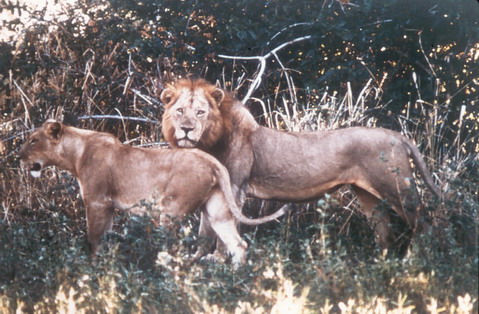
Lions are guests at a cocktail party - sundowners

Courtesy of Norman Carr Safaris - here's a surprising development as sundowners were being served...
http://twitpic.com/bkea3
http://www.normancarrsafaris.com
Monday, July 6, 2009
KIDS FOR FREE WITH NORMAN CARR SAFARIS
FOR EVERY FULL PAYING ADULT – ONE CHILD STAYS FREE OF CHARGE.
Only flights and National Park fees to pay.
Offer applies from July 1st to October 31st 2009.
No minimum stay, applies to children up to the age of 17.
Children will stay in the same room as full paying adults. All accommodation, meals, drinks and game viewing activities are free of charge for each child traveling with full paying adult. Offer applies to Kapani Lodge but if availability and child’s age allows – bush camps may be included in the safari.
Contact
Kapani@normancarrsafaris.com
for a quote and further details
Only flights and National Park fees to pay.
Offer applies from July 1st to October 31st 2009.
No minimum stay, applies to children up to the age of 17.
Children will stay in the same room as full paying adults. All accommodation, meals, drinks and game viewing activities are free of charge for each child traveling with full paying adult. Offer applies to Kapani Lodge but if availability and child’s age allows – bush camps may be included in the safari.
Contact
Kapani@normancarrsafaris.com
for a quote and further details
Friday, July 3, 2009
What Makes A Safari in Zambia Unique?
Zambia is Africa’s best kept secret. It is the sleeping giant of African safari. It also has friendly people and peace that the country safeguards and continues to enjoy. That’s what makes the country a haven for refuges from civil strive. …And Zambia is a hub of African travel.
Zambia is located in south central Africa with eight neighboring countries. There are 19 national parks and 34 game management areas. Thus a whopping 30 percent of the country’s 752,614 sq kms. The country has the largest water resources in southern Africa. There are large empty tracts of land in pristine state and a large wildlife estate. Zambia’s unique natural resources include minerals such as copper, precious stones and lumber; both native hard wood and soft exotic pinewood timber.
The population to land ratio is one of the lowest in Africa. At less than 15 people per sq km it is one of the lowest in the world. The sparse population has left a large portion of Zambia unspoiled in its natural state. You get to see teeming wildlife in pristine wilderness. Some of the animals have had little or no contact with humans. So the national parks present wildlife in its natural habitat.
The National Parks
Of the 19 national parks South Luangwa is Zambia’s premier game reserve. The South Luangwa National Park has probably the largest variety and concentration of game in Africa and perhaps in the world. Experts consider the 9,990 sq kms park to have some of the finest game-viewing areas anywhere. It is rated one of the top game reserves in the world with a profusion of wildlife. Some animals are only found in this reserve. An example is the Thornicroft giraffe.
Another game reserve is the Kafue National Park. The sprawling 22,400 sq kms is the second largest national park in the world and is about the size of Wales in Britain and twice the size of Yellowstone National Park in the USA. The park is located in the central-western Zambia and boasts excellent game viewing, bird watching and fishing.
The park has two unique wetlands. The Busanga Floodplain in the northern sector is special. The emerald green Lunga, Lufupa and Kafue Rivers crisscross it. Here are found multiple species of animals and birds. The Busanga plain is antelope country. The endemic lechwe fill its plains. The park’s southern limit also breaks into another wetland the Nanzhila Plains. The plains are next to Zambia’s newest lake at the Itezhi-Tezhi Dam.
http://www.fundednfree.com/africansafari.html
Zambia is located in south central Africa with eight neighboring countries. There are 19 national parks and 34 game management areas. Thus a whopping 30 percent of the country’s 752,614 sq kms. The country has the largest water resources in southern Africa. There are large empty tracts of land in pristine state and a large wildlife estate. Zambia’s unique natural resources include minerals such as copper, precious stones and lumber; both native hard wood and soft exotic pinewood timber.
The population to land ratio is one of the lowest in Africa. At less than 15 people per sq km it is one of the lowest in the world. The sparse population has left a large portion of Zambia unspoiled in its natural state. You get to see teeming wildlife in pristine wilderness. Some of the animals have had little or no contact with humans. So the national parks present wildlife in its natural habitat.
The National Parks
Of the 19 national parks South Luangwa is Zambia’s premier game reserve. The South Luangwa National Park has probably the largest variety and concentration of game in Africa and perhaps in the world. Experts consider the 9,990 sq kms park to have some of the finest game-viewing areas anywhere. It is rated one of the top game reserves in the world with a profusion of wildlife. Some animals are only found in this reserve. An example is the Thornicroft giraffe.
Another game reserve is the Kafue National Park. The sprawling 22,400 sq kms is the second largest national park in the world and is about the size of Wales in Britain and twice the size of Yellowstone National Park in the USA. The park is located in the central-western Zambia and boasts excellent game viewing, bird watching and fishing.
The park has two unique wetlands. The Busanga Floodplain in the northern sector is special. The emerald green Lunga, Lufupa and Kafue Rivers crisscross it. Here are found multiple species of animals and birds. The Busanga plain is antelope country. The endemic lechwe fill its plains. The park’s southern limit also breaks into another wetland the Nanzhila Plains. The plains are next to Zambia’s newest lake at the Itezhi-Tezhi Dam.
http://www.fundednfree.com/africansafari.html
Wednesday, July 1, 2009
Luangwa Valley
The Luangwa Valley is famous because of its walking safaris and this is without doubt the most thrilling way of seeing the bush and game.
South Luangwa National Park located at the tail end of the Great Rift Valley covers almost 3500 square miles of Zambia's pristine wilderness. The park consists of large amounts of woodland; miombo interspersed with grass lands in the north of the park and large stands of mature ebony forming deep shade along the banks of the river.
It is the Luangwa River, slowly meandering its way through the park from north to south, which gives the park it's particul+ar character. The soft soil and shallow gradient between the north and south of the park, combine to make ideal conditions for the formation of the oxbow lakes for which South Luangwa is well known. These Oxbows eventually silt up and grass over. This is one of the elements which produce such exceptional game viewing as well as some spectacular scenery; grassy glades, magnificent stands of ebony and tranquil lagoons teaming with birdlife. The Luangwa valley is also criss crossed with sand rivers and some shallow, clear water rivers that flow all year round.
Luangwa is well known for large populations of all the major African mammals (with the exception of Rhino, which were poached to extinction in the 80s - but are being reintroduced into North Luangwa). It has a reputation for some of the best leopard sightings in Africa. This is partly because of the ideal nature of the habitat which includes thick riverine bush with plenty of cover, lots of game and some large shady trees to lie up in and also, unlike many parks in Africa, night game driving is allowed.
There are bush buck, puku, kudu, impala, zebra (although not many in the south) the indigenous Thornicroft giraffe and all the main predators, lion, leopard etc, including wild dog and the smaller predators such as genet, civet, mongoose etc. The bird life is excellent and very vocal with the oxbows and river attracting a vast number of water birds.
The game viewing is outstanding up near Mfuwe (the park entrance) where the animals are very used to vehicles all year round. Mfuwe area is also quite busy, so you have to be prepared for other vehicles which you really notice at night because of the spot lights used on night drives. The lodges around Mfuwe are usually a base from which to go into the park and with the game being so habituated in the area, it is an idea to have a night or two at the beginning of the trip for some game drives and night drives and to then head off into the bush for the walking.
The north park and Nsefu sector which has camps such as Tena Tena, Nsefu, Kaingo, Mchenja and Tafika, is particularly beautiful with some really very impressive ebony groves. These tall and majestic trees give a dreamy dappled shade to almost lawn like grass underneath and are a haven for the game. The area is also generally more open with the huge Mtanda plains and hot springs/salt pans which certainly at the beginning of the season makes for slightly easier game viewing.
Most companies have a main lodge close to Mfuwe and then several bushcamps. These are all very individual and can very easily be combined with each other. There is also the option of doing mobile walking safaris where you walk from camp to camp.
The beauty of the bushcamps is that the day is slightly more relaxed, walking is the main activity, so you feel as though you have earned the huge amounts of delicious food on offer and you really do experience the smaller things of the bush as well as, of course, the thrill of coming across the bigger game on foot.
The main season for the Luangwa is between June and October and as the season goes on, so the Luangwa river dries up leaving vast sandbanks and huge pods of hippo, all jealously guarding their own territories. The Luangwa also boasts one of the largest population of crocodile in Africa and there are some very impressive beasts to be seen basking in the sun. The animals come to the main areas of water to drink, which is obviously the river, but is also some of the oxbow lagoons that lead off the river. The drier it gets the more the animals congregate and you can get herds of over 1000 buffalo. Just after the rains in October the Luangwa bursts into flower and there are areas full of wild jasmine and other flowering shrubs. The impala drop their young and it can be a magical time of year to visit.
The Luangwa is also stunning in the emerald season. The inland areas of the park are impassable because of flooding and much of the park is made up of black cotton soil which is a nightmare in the rains. However around Mfuwe there are some great roads and the animals all concentrate around the area as the rest of the park floods. They breed, so there are lots of babies around and the rivers fill up so you can do boating activities. The bush turns emerald green and it really is a beautiful time to travel. During this season there are a couple of bush camps still open where you area able to walk or do boating safaris.
http://www.naturalhighsafaris.com/zambia/subregion/south_luangwa.html
South Luangwa National Park located at the tail end of the Great Rift Valley covers almost 3500 square miles of Zambia's pristine wilderness. The park consists of large amounts of woodland; miombo interspersed with grass lands in the north of the park and large stands of mature ebony forming deep shade along the banks of the river.
It is the Luangwa River, slowly meandering its way through the park from north to south, which gives the park it's particul+ar character. The soft soil and shallow gradient between the north and south of the park, combine to make ideal conditions for the formation of the oxbow lakes for which South Luangwa is well known. These Oxbows eventually silt up and grass over. This is one of the elements which produce such exceptional game viewing as well as some spectacular scenery; grassy glades, magnificent stands of ebony and tranquil lagoons teaming with birdlife. The Luangwa valley is also criss crossed with sand rivers and some shallow, clear water rivers that flow all year round.
Luangwa is well known for large populations of all the major African mammals (with the exception of Rhino, which were poached to extinction in the 80s - but are being reintroduced into North Luangwa). It has a reputation for some of the best leopard sightings in Africa. This is partly because of the ideal nature of the habitat which includes thick riverine bush with plenty of cover, lots of game and some large shady trees to lie up in and also, unlike many parks in Africa, night game driving is allowed.
There are bush buck, puku, kudu, impala, zebra (although not many in the south) the indigenous Thornicroft giraffe and all the main predators, lion, leopard etc, including wild dog and the smaller predators such as genet, civet, mongoose etc. The bird life is excellent and very vocal with the oxbows and river attracting a vast number of water birds.
The game viewing is outstanding up near Mfuwe (the park entrance) where the animals are very used to vehicles all year round. Mfuwe area is also quite busy, so you have to be prepared for other vehicles which you really notice at night because of the spot lights used on night drives. The lodges around Mfuwe are usually a base from which to go into the park and with the game being so habituated in the area, it is an idea to have a night or two at the beginning of the trip for some game drives and night drives and to then head off into the bush for the walking.
The north park and Nsefu sector which has camps such as Tena Tena, Nsefu, Kaingo, Mchenja and Tafika, is particularly beautiful with some really very impressive ebony groves. These tall and majestic trees give a dreamy dappled shade to almost lawn like grass underneath and are a haven for the game. The area is also generally more open with the huge Mtanda plains and hot springs/salt pans which certainly at the beginning of the season makes for slightly easier game viewing.
Most companies have a main lodge close to Mfuwe and then several bushcamps. These are all very individual and can very easily be combined with each other. There is also the option of doing mobile walking safaris where you walk from camp to camp.
The beauty of the bushcamps is that the day is slightly more relaxed, walking is the main activity, so you feel as though you have earned the huge amounts of delicious food on offer and you really do experience the smaller things of the bush as well as, of course, the thrill of coming across the bigger game on foot.
The main season for the Luangwa is between June and October and as the season goes on, so the Luangwa river dries up leaving vast sandbanks and huge pods of hippo, all jealously guarding their own territories. The Luangwa also boasts one of the largest population of crocodile in Africa and there are some very impressive beasts to be seen basking in the sun. The animals come to the main areas of water to drink, which is obviously the river, but is also some of the oxbow lagoons that lead off the river. The drier it gets the more the animals congregate and you can get herds of over 1000 buffalo. Just after the rains in October the Luangwa bursts into flower and there are areas full of wild jasmine and other flowering shrubs. The impala drop their young and it can be a magical time of year to visit.
The Luangwa is also stunning in the emerald season. The inland areas of the park are impassable because of flooding and much of the park is made up of black cotton soil which is a nightmare in the rains. However around Mfuwe there are some great roads and the animals all concentrate around the area as the rest of the park floods. They breed, so there are lots of babies around and the rivers fill up so you can do boating activities. The bush turns emerald green and it really is a beautiful time to travel. During this season there are a couple of bush camps still open where you area able to walk or do boating safaris.
http://www.naturalhighsafaris.com/zambia/subregion/south_luangwa.html
Monday, May 11, 2009
Luangwa Valley - Waiting for Thunder
In Zambia's Luangwa Valley, rain and river create a wildlife stronghold.
The Luangwa, one of the last major unaltered rivers in southern Africa, is the lifeline—and protector—of the valley it threads. Hippos, elephants, giraffes, lions, leopards, buffalo, and scores of other species flourish in the 20,000 square miles (52,000 square kilometers) of savanna-woodland watered by this 500-mile-long (800 kilometers) river. It is people that have been scarce here, especially beyond the town of Mfuwe. One reason is the Luangwa's annual flood cycle. Each year during the rains, the river reinvents the land. Swelling from a knee-deep stream to a roiling brown torrent, it carves new channels and spills into surrounding plains and woodlands, making this broad valley in eastern Zambia impassable by road for nearly half the year. For the other half, the waters retreat, leaving behind a rejuvenated landscape, which slowly parches through the long dry months that follow, when temperatures steadily climb until the land throbs with heat and thirst.
By late October, the floodplains are grazed to stubble, and a hot wind spins dust devils in the powdery soil. At dusk, hippos leave the river's last deep pools and melt into the darkness of the bush to forage. Some walk for miles to find food, and many die in this season of stress. One morning a small dead hippo floats by. Female hippos approach and nuzzle it, licking its skin, then moving away.
The seasons can be hard on the valley's wildlife, but people have been harder still. Hunting and poaching, even within the national parks, have drastically reduced hippo and elephant populations in the past, yet both have made a comeback, thanks in part to changes in enforcement and attitude. The resurgence is a sign of human tolerance and nature's resilience.
In November thunderheads build, bruised and dark, and the sky rumbles all night. One afternoon the earthy aroma of an approaching downpour blows in on a hard wind, and a cool gray curtain of rain sweeps the land, beating down in a torrent, rinsing dust from grasses and trees. Almost overnight, green shoots poke up from the earth. Bare mopani woodlands shimmer pink with new leaves. Lemon yellow blooms pop from acacias, and fragile spider lilies spring up in white drifts on the plains. Elephants and buffalo disperse into the uplands, where the browse is fresh. Impalas give birth, and zebras materialize from the bush with tiny foals.
Within days of the first rain, Abdim's storks appear overhead, wheeling in great gyres of thousands of birds. They are migrating south, and some Africans know them as bringers of rain. They touch down in a bobbing mass, moving together through the grass in a broad front, like fire, finding frogs and insects brought forth by the water. A new season is here.
http://ngm.nationalgeographic.com/2007/05/zambia-wildlife/eckstrom-text.html
The Luangwa, one of the last major unaltered rivers in southern Africa, is the lifeline—and protector—of the valley it threads. Hippos, elephants, giraffes, lions, leopards, buffalo, and scores of other species flourish in the 20,000 square miles (52,000 square kilometers) of savanna-woodland watered by this 500-mile-long (800 kilometers) river. It is people that have been scarce here, especially beyond the town of Mfuwe. One reason is the Luangwa's annual flood cycle. Each year during the rains, the river reinvents the land. Swelling from a knee-deep stream to a roiling brown torrent, it carves new channels and spills into surrounding plains and woodlands, making this broad valley in eastern Zambia impassable by road for nearly half the year. For the other half, the waters retreat, leaving behind a rejuvenated landscape, which slowly parches through the long dry months that follow, when temperatures steadily climb until the land throbs with heat and thirst.
By late October, the floodplains are grazed to stubble, and a hot wind spins dust devils in the powdery soil. At dusk, hippos leave the river's last deep pools and melt into the darkness of the bush to forage. Some walk for miles to find food, and many die in this season of stress. One morning a small dead hippo floats by. Female hippos approach and nuzzle it, licking its skin, then moving away.
The seasons can be hard on the valley's wildlife, but people have been harder still. Hunting and poaching, even within the national parks, have drastically reduced hippo and elephant populations in the past, yet both have made a comeback, thanks in part to changes in enforcement and attitude. The resurgence is a sign of human tolerance and nature's resilience.
In November thunderheads build, bruised and dark, and the sky rumbles all night. One afternoon the earthy aroma of an approaching downpour blows in on a hard wind, and a cool gray curtain of rain sweeps the land, beating down in a torrent, rinsing dust from grasses and trees. Almost overnight, green shoots poke up from the earth. Bare mopani woodlands shimmer pink with new leaves. Lemon yellow blooms pop from acacias, and fragile spider lilies spring up in white drifts on the plains. Elephants and buffalo disperse into the uplands, where the browse is fresh. Impalas give birth, and zebras materialize from the bush with tiny foals.
Within days of the first rain, Abdim's storks appear overhead, wheeling in great gyres of thousands of birds. They are migrating south, and some Africans know them as bringers of rain. They touch down in a bobbing mass, moving together through the grass in a broad front, like fire, finding frogs and insects brought forth by the water. A new season is here.
http://ngm.nationalgeographic.com/2007/05/zambia-wildlife/eckstrom-text.html
Saturday, May 9, 2009
Zambia's Incredible North Luangwa
Local communities to benefit from tourism ventures in their localities
A South African Non-Governmental Organisation (NGO) dealing with the promotion of tourism has pledged to work closely with the local people to promote tourism in the country.
Open Africa is an NGO that promotes the development of tourism corridor routs in six southern Africa countries namely South Africa, Namibia, Lesotho, Swaziland, Zambia and Mozambique,
Zambian route developer Cobus du Plessis said tourism can play a cardinal role towards alleviating poverty levels in the country if only local citizens participate in the implementation process.
Mr. Plessie told ZANIS in an interview in Lusaka that despite Zambia been a country that has attract many tourists through its vast natural resources, her citizen have continued to live in abject poverty.
He said it is for his reason that his organisation has targeted full participation of local communities as a way of encouraging them to invest in the tourism sector and mitigate the effects of the global economic crisis.
He said despite the global economic crisis, tourism has proved to be a sector that can still continue to contribute to the economic growth of the country if all citizens are allowed to take part.
Meanwhile, Mr. Plessie has challenged tour operators in the country to lower their charges and also market their products locally to attract more tourists and increase their revenue base.
In Zambia the NGO will open five new routes in Kasanka national park, North Luangwa, Mpika, Southern Kafue and the Barotse land.
And the Private Sector Development Association (PSDA) has encouraged the business community especially in the tourism industry to collaborate if they are to remain in business during the global economic meltdown.
PSDA chairperson Yusuf Dodia explained that by working together operators will come up with constructive solutions that will go a long way towards revamping the national economy.
Mr. Dodia further hinted that Zambian tourism industry still stands a great potential of overcoming the current economic challenges if it is properly managed.
http://www.lusakatimes.com/?p=11726
A South African Non-Governmental Organisation (NGO) dealing with the promotion of tourism has pledged to work closely with the local people to promote tourism in the country.
Open Africa is an NGO that promotes the development of tourism corridor routs in six southern Africa countries namely South Africa, Namibia, Lesotho, Swaziland, Zambia and Mozambique,
Zambian route developer Cobus du Plessis said tourism can play a cardinal role towards alleviating poverty levels in the country if only local citizens participate in the implementation process.
Mr. Plessie told ZANIS in an interview in Lusaka that despite Zambia been a country that has attract many tourists through its vast natural resources, her citizen have continued to live in abject poverty.
He said it is for his reason that his organisation has targeted full participation of local communities as a way of encouraging them to invest in the tourism sector and mitigate the effects of the global economic crisis.
He said despite the global economic crisis, tourism has proved to be a sector that can still continue to contribute to the economic growth of the country if all citizens are allowed to take part.
Meanwhile, Mr. Plessie has challenged tour operators in the country to lower their charges and also market their products locally to attract more tourists and increase their revenue base.
In Zambia the NGO will open five new routes in Kasanka national park, North Luangwa, Mpika, Southern Kafue and the Barotse land.
And the Private Sector Development Association (PSDA) has encouraged the business community especially in the tourism industry to collaborate if they are to remain in business during the global economic meltdown.
PSDA chairperson Yusuf Dodia explained that by working together operators will come up with constructive solutions that will go a long way towards revamping the national economy.
Mr. Dodia further hinted that Zambian tourism industry still stands a great potential of overcoming the current economic challenges if it is properly managed.
http://www.lusakatimes.com/?p=11726
Subscribe to:
Posts (Atom)