I have personally experienced the Luangwa Valley, so I am happy to refer to this post:
Many people have different expectations from a safari to the African continent, some enjoy relaxing in five star accommodation with spas and the latest treatments, with world class dining and fine wines, whilst others want to totally immerse themselves deep in the bush.
Either experience will afford high quality game viewing but the latter most definitely provides a real sense of Africa “unplugged”.
Walking safaris were pioneered in Zambia’s South Luangwa by the renowned Norman Carr over fifty years ago and today his legacy is a small selection of high quality bush camps which are platforms for exciting foot safaris.
Bush camps tend to be much smaller than traditional safari lodges, taking between 6 to 10 guests at a time and more traditional in design with a handful of thatched cottages, usually opening onto a tranquil bend of the Luangwa River.
The key to any safari in Africa is the quality of the guiding and Zambian guides are amongst the very best - taking guests out on foot requires a high level of concentration and sensory perception.
Imagine coming across all of the wildlife you would see from the comfort of your seat in a large 4x4 vehicle, now imagine the same experience on foot. Safety is paramount and the experience is unforgettable.
My very first walking safari in the South Luangwa brought our small group to within 100 feet of a pair of mating leopards!
Zambia’s National Parks are well established - and during the dry season - which runs between May and the end of October, the South Luangwa provides exceptional game viewing.
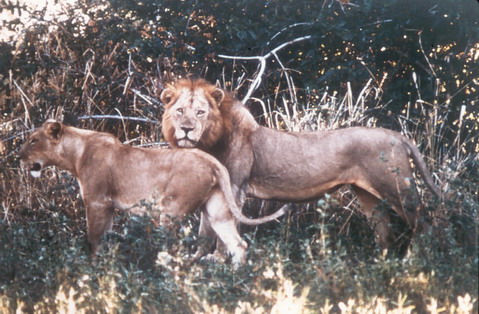
Large breeding herds of elephant trawl through the mopane forests , along with even larger herds of buffalo. Large prides of lion defend their territories from the local competition and the chances of seeing leopard in the wild are perhaps higher than in any other location in Africa.
Many different species of antelope thrive in Zambia as well as the more unusual Thorneycroft’s Giraffe and Cookson’s Wildebeest.
The Luangwa River supports high concentrations of hippopotamus and as the dry season progresses and the river shrinks, it is not uncommon to see pods of several hundred hippos gathering in the deeper channels.
Strategically placed photographic hides provide exceptional opportunities to get close to these large river horses and observe their behaviour.
Zambia is easily accessible with direct flights from the UK into the capital, Lusaka. A short flight then takes you to the small town of Mfuwe which is the gateway to a safari in the South Luangwa.
And as you make your way to camp, the spectacular beauty of one of Africa’s last true wilderness areas unfolds, drawing you in and holding your imagination captive for the next few days.
If a walking safari in Zambia sounds like the style of safari you would enjoy, make sure you talk with someone who has visited the area and can provide an impartial insight into the best location and camp for you depending on your expectations, as some camps are more rustic than others.
Read the original here:
Sunday, May 2, 2010

Tuesday, February 23, 2010
The perfect classroom: learn photo tricks on Zambian safari
Award-winning photographer David Rogers has spent the last 15 years of his life capturing stunning scenes of the South and East African landscape at hundreds of different locations. Now, he has teamed up with the renowned and extremely exclusive Robin Pope Safaris to offer his expertise on wildlife photography in the world's biggest classroom: the South Luangwa Valley of Zambia.
Read more
Read more
Friday, January 22, 2010
African Safari Tour
Everything You Need To Know About An African Safari Tour
An African safari is an exciting vacation far from the cares of everyday life or a person's typical environment.
On a safari, individuals can observe wildlife, take breathtaking photographs, and experience some of the most beautiful places on earth.
Many people believe that safaris are dangerous because the wildlife is really wild and is roaming free in the environment, but the truth is that numerous safety precautions are taken by the guide of the African safari to ensure the safety of every person on the tour.
An African safari vacation is a great idea for people of all ages. The tours combine all of the excitement and adventure of a safari into a smaller amount of time.
The guests do not have to stay out in the wild overnight unless they choose an overnight safari.
African safaris are great for viewing wildlife in their natural habitat and seeing how they truly act in nature. The intention of the safari guide is to ensure that individuals have a great time and get to see as many animals as possible.
African Safari Specifics
The length of an African safari will vary from company to company. Some safaris last for a few hours while others can last for a few days.
Read More
An African safari is an exciting vacation far from the cares of everyday life or a person's typical environment.
On a safari, individuals can observe wildlife, take breathtaking photographs, and experience some of the most beautiful places on earth.
Many people believe that safaris are dangerous because the wildlife is really wild and is roaming free in the environment, but the truth is that numerous safety precautions are taken by the guide of the African safari to ensure the safety of every person on the tour.
An African safari vacation is a great idea for people of all ages. The tours combine all of the excitement and adventure of a safari into a smaller amount of time.
The guests do not have to stay out in the wild overnight unless they choose an overnight safari.
African safaris are great for viewing wildlife in their natural habitat and seeing how they truly act in nature. The intention of the safari guide is to ensure that individuals have a great time and get to see as many animals as possible.
African Safari Specifics
The length of an African safari will vary from company to company. Some safaris last for a few hours while others can last for a few days.
Read More
Monday, January 4, 2010
Norman Carr Safaris
We refer to another blog post that we found very informative:
Norman Carr Safaris consists of Kapani Lodge , an eight-room luxury lodge adjacent to the South Luangwa National Park, and four seasonal luxurious bush camps, dotted in isolated areas of the park, each with its own personality (some tented, some built with reeds). Even though they are called bush camps, they are completely rebuilt every season, all en-suite with open-air showers and no attention to detail spared.
Read more and see videos at:
Read More
Norman Carr Safaris consists of Kapani Lodge , an eight-room luxury lodge adjacent to the South Luangwa National Park, and four seasonal luxurious bush camps, dotted in isolated areas of the park, each with its own personality (some tented, some built with reeds). Even though they are called bush camps, they are completely rebuilt every season, all en-suite with open-air showers and no attention to detail spared.
Read more and see videos at:
Read More
Wednesday, December 2, 2009
Get away from it all in the Luangwa Valley
How to describe the "getting away from it all" when on safari?
Permit us to quote a great description of what it is like to soak up the experience of a stay in the Luangwa Valley - (link to original blog below):
Quote:
Two nights in Croc Valley
Croc Valley camp is called Croc Valley for good reason: located on the banks of the Luangwa River you can literally sit in a hammock, look out over the river and watch as the water spontaneously erupts into a thrashing of tails and teeth.
We were the only people staying at this luxurious camp (you can always tell a luxurious camp because the prices on the menu are quoted in USDs) so it was a fantastic opportunity to soak up the atmosphere of the national park that surrounded it. We were here for two nights so we had a whole day to wallow in the pool (deliberately shallow in case animals ever fall in), relax in hammocks and just sit and listen to the sounds of nature.
Every now and then the trumpeting of elephants nearby would drown out conversation; at night hippos brushed by our tents and hyenas cackled in the distance.
Sun rise here was spectacular. I woke up at 4.30am as the sun began to rise and watched as the sky became awash with rich oranges and reds. Captured on camera, the reflection of the sunrise in the river suggested the presence of two red suns.
As the sun rose, the national park came to life: vervet monkeys and olive baboons that frequented the camp awoke from slumber and began to clamber around the trees (or in the camp kitchen!) in search for food chattering as they went; birds burst into song, hippos grunted and guffawed and thirsty antelope came down to the river’s edge to drink.
Sitting there on a wooden bench overlooking the river contemplating U.L.E (universe, life, everything) I realized that I felt utterly stress free. Despite being homeless, jobless and pretty much penniless, I’m probably the happiest I’ve been in five years.
Unquote.
To read the original, go here.
Permit us to quote a great description of what it is like to soak up the experience of a stay in the Luangwa Valley - (link to original blog below):
Quote:
Two nights in Croc Valley
Croc Valley camp is called Croc Valley for good reason: located on the banks of the Luangwa River you can literally sit in a hammock, look out over the river and watch as the water spontaneously erupts into a thrashing of tails and teeth.
We were the only people staying at this luxurious camp (you can always tell a luxurious camp because the prices on the menu are quoted in USDs) so it was a fantastic opportunity to soak up the atmosphere of the national park that surrounded it. We were here for two nights so we had a whole day to wallow in the pool (deliberately shallow in case animals ever fall in), relax in hammocks and just sit and listen to the sounds of nature.
Every now and then the trumpeting of elephants nearby would drown out conversation; at night hippos brushed by our tents and hyenas cackled in the distance.
Sun rise here was spectacular. I woke up at 4.30am as the sun began to rise and watched as the sky became awash with rich oranges and reds. Captured on camera, the reflection of the sunrise in the river suggested the presence of two red suns.
As the sun rose, the national park came to life: vervet monkeys and olive baboons that frequented the camp awoke from slumber and began to clamber around the trees (or in the camp kitchen!) in search for food chattering as they went; birds burst into song, hippos grunted and guffawed and thirsty antelope came down to the river’s edge to drink.
Sitting there on a wooden bench overlooking the river contemplating U.L.E (universe, life, everything) I realized that I felt utterly stress free. Despite being homeless, jobless and pretty much penniless, I’m probably the happiest I’ve been in five years.
Unquote.
To read the original, go here.
Wednesday, November 25, 2009

Wednesday, November 4, 2009
Classic 10 Night South Luangwa Safari
This writer found the Luangwa Valley unforgettable - I was fortunate enough to experience it when Norman Carr himself was there.
At the Norman Carr Safaris' website you can find this suggestion:
60th Anniversary Celebration - Classic 10 night South Luangwa Safari with Norman Carr Safaris
Please note that all of our safari packages are tailor-made, this itinerary is just a suggestion and can be amended to better fit your requirements.
2 nights Kapani
2 nights Luwi Bushcamp
2 nights Nsolo Bushcamp
2 nights Kakuli Bushcamp
2 nights Mchenja Camp
This Classic South Luangwa Safari includes all the best that the South Luangwa has to offer. There is plenty of time to explore the amazing variety of habitat and species. Help us celebrate 60 years of safari excellence. Leading the way since 1950.
Norman Carr Safaris
At the Norman Carr Safaris' website you can find this suggestion:
60th Anniversary Celebration - Classic 10 night South Luangwa Safari with Norman Carr Safaris
Please note that all of our safari packages are tailor-made, this itinerary is just a suggestion and can be amended to better fit your requirements.
2 nights Kapani
2 nights Luwi Bushcamp
2 nights Nsolo Bushcamp
2 nights Kakuli Bushcamp
2 nights Mchenja Camp
This Classic South Luangwa Safari includes all the best that the South Luangwa has to offer. There is plenty of time to explore the amazing variety of habitat and species. Help us celebrate 60 years of safari excellence. Leading the way since 1950.
| Days 1 and 2 - Kapani Lodge | |
 Kapani Lagoon House You will be met at Lusaka Airport and escorted onto your domestic flight to Mfuwe. Your safari guide will meet you at Mfuwe Airport and drive you to Kapani Lodge in time to settle in before brunch. You will have the rest of the day to relax, until tea at about 3pm followed by the afternoon game drive. After sundowners, the night drive is a search for nocturnal species such as genet, civet, porcupine and honey-badger, rarely seen in daylight hours. This is the best chance of spotting leopard and lion when they are at their most active. Return to camp at around 7:30pm in time for dinner. | |
| Days 3 and 4 - Luwi Bushcamp | |
 Tea After two nights at Kapani you will be driven deep into the National Park to Luwi Bushcamp. Described as Africa’s last real bush camp, wonderfully rustic and authentic, Luwi is set in the shade of large trees close to a permanent lagoon. The four rooms at Luwi have dry grass walls and thatched roofs with en-suite bathrooms open to the trees and stars above. Your safari guide will introduce you to the armed escort scout who will accompany you on your first real walking safari. The guide will take time to point out the tracks and signs that he uses to interpret the bush. Your first night in the bushcamp is likely to be accompanied by the noises of animals around camp. When day breaks, your guide will interpret the calls that kept you awake as you head out together and pick up the fresh tracks of a pride of lion or investigate the alarm calls of the local troop of baboon. This is no nature trail - this is the real thing - you are tracking big game through the African bush, on foot like the first Luangwa pioneers. | |
| Days 5 and 6 - Nsolo Bushcamp | |
 Pool On the second morning at Luwi, head out from camp as you did on the previous day but this time your guide will walk you down the Luwi river course. Your destination is Nsolo, the second of your bushcamps. After a few hours gentle walking you will arrive into camp. A cool drink will be ready for you, brunch will be on the table and your bags will be in your room. Your home for the next two nights will be a raised deck with dry grass walls and a tall, cool thatched roof. Once more your en-suite bathroom is open to the sky above. | |
| Days 7 and 8 - Kakuli Bushcamp | |
 Different Species The next move takes you further down the Luwi River, again on foot or by 4x4 game viewer if you prefer, to its confluence with the main Luangwa River and to Kakuli Camp. This camp is tented and has stunning views along a stretch of the Luangwa that is home to over five hundred hippo. Each of the four large Mehru style tents has a spectacular river view. Much of the gameviewing is still on foot although there are more game viewing tracks in this area so it is possible to use vehicles and with a dense population of leopards in the area the night drives are usually most rewarding. | |
| Days 9 and 10 - Mchenja Camp | |
 Leopard A taste of luxury awaits you at Mchenja. The last of your camps is set under the shade of immense ebony trees. The four individually designed tents each have a bath inside as well as an open, en-suite shower and toilet. The main chitenje (lounge) houses a small plunge pool alongside the bar and sitting area and meals are usually taken on the river bank. | |
| Day 11 - Return | |
 Elephant Walk Last drive through the National Park as you transfer from Mchenja to Mfuwe Airport for your flight out of the valley. | |
Norman Carr Safaris
Subscribe to:
Posts (Atom)