Saturday, September 19, 2009

Zambia safaris: Elephants, baboons and a walk on the wild side in stunning South Luangwa

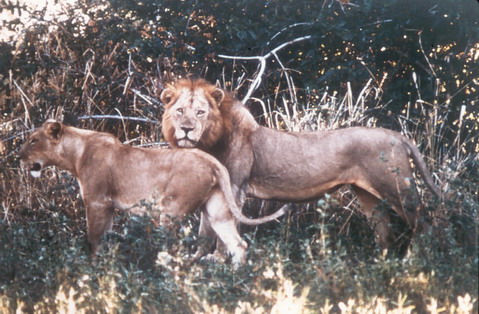
A gentle voice outside the tent-flap murmurs: 'Morning, morning.' During the night, hyenas whooped and howled persistently, so close behind the camp that their mournful wails seemed to rattle the guy ropes and, from time to time, lions roared. But now, just before dawn, absolute silence reigns.

Elephants, Zambia

Trunk enthrall: Elephants and buffalo cross the Luangwa River in Zambia

Hot water has arrived in each washing bowl. Breakfast is ready on the riverbank: tea, coffee, porridge and toast, cooked over a fire of mopane wood, which gives the food a special tang. We eat quickly, on our feet, watching the eastern sky start to glow, until a huge ball of fiery crimson climbs over the horizon and sets the surface of the river alight.

By 6.15am we are on our way. 'Keep behind me in single file,' says our leader, Robin Pope. 'If anything starts to happen, stay bunched together. Don't run.'

Out front is our escort scout, Piela Nandila, armed with a loaded .375 rifle. Next comes Robin, then the six of us, and at the back our tea-carrier Jonathan Mbao, swinging a fearsome machete.


Read more: http://www.dailymail.co.uk/travel/article-1213066/Zambia-safaris-Elephants-baboons-walk-wild-stunning-South-Luangwa.html#ixzz0RbsQTEQd

Saturday, August 22, 2009

African Safari Destination – The Luangwa Valley, Zambia

A pristine river runs through the lush rift valley that is known as Luangwa National Park, Zambia. The Luangwa river is one of the major tributaries of the Zambezi River, and one of the four biggest rivers in Zambia. Surprisingly, it is largely unaffected by man – there is no commercial agriculture along its banks, no sections of the river have been dammed and there is little/no pollution problem. The result is a very natural and untouched river, deep in the African countryside where natural seasonal fluctuations of water (flooding through to the vision of crisp river bed in the dry season) can be witnessed together with teaming wildlife during an African adventure holiday.

The river is so natural that oxbow lakes are scattered across the valley from where the river course has changed with the floods. Over the years river side camps and lodges have had to move. Here the river is king!

It is said that the Luangwa River in Zambia is the most unaltered and significant river system in Africa and it certainly is the key ingredient that keeps all 9050km2 of the park with over 60 different animal species and over 400 different bird species alive.

A large quantity of game can be found here since Zambia remains largely untouched by the tourist rush. Water results in rich vegetation that feeds varying herbivore animals and herds including buffalo, elephant, puku, impala and the more rare subspecies of Thornicroft giraffe and Crawshay’s zebra that are found here. Healthy and large populations of herbivores feed predators like lion, hyenas and leopard. In fact a BBC documentary suggests an average density of one leopard per 2.5km2 – twice the density recorded in Kruger, South Africa.

The best time to see game is in the dry season from April to October. As the river dries up the animals visit the lagoons and oxbow lakes to drink more frequently. Seeing them here in their natural environment is breathtaking.

As short rain showers begin to fall in November most animals give birth to their young and since the grass is still short spectacular sightings of mothers and their young can be seen. The landscape begins to change from a golden brown, dusty and dry land to an emerald green – known as Zambia’s green season.

Zambia’s Luangwa River also means that the valley can boast very rich populations of tropical bird life, including birds that live close to water and birds that prefer drier habitats in the forests and on the plains. The best time to see these birds is in the rainy season (November to March) since the rain provides abundant food supplies for them. Summer migrants are also present in the Luangwa valley at this time. Flocks of birds can be noted and a special site is a breeding colony of yellow-billed storks with their pink breeding plumage. The rain does not fall consistently and rarely lasts for more than a few hours, so you can still enjoy game drives and birding to the full.

In April and May, the rains will have stopped and the landscape begins to dry out. The Luangwa rivers water level begins to drop and sandbanks (the signature of the Luangwa River) are exposed. Once drenched roads begin to dry out and the main safari season beings once more. As the lush green grass begins to turn golden brown one truly understands the Luangwa River really is the life blood of this untouched landscape in the Luangwa National Park, Zambia.

Note: If you wish to publish this article on your website, blog, etc. you can as long as the article remains in its full entirety; including the links and the author resource box.
Sara Brown is instrumental in the running of the Best of Zambia site (http://www.thebestofzambia.com/), a website dedicated to putting Zambia on the map by creating a strong internet presence and successfully promoting Zambia and those operating in Zambia. This site will help potential visitors to Zambia reasearch this beautiful country, find the perfect holiday in Zambia, plan their trip and send out enquiries. As the site develops it will have useful links to the international development sector, commercial and investment opportunities and, local businesses and services.

Our mission is to ensure the Best of Zambia site becomes THE information hub for all things Zambia. You can learn more about the Best of Zambia and how you can benefit from our products and services at our constantly updated website, http://www.thebestofzambia.com/

Zambia is stunning and tourism is increasing. Despite this many would prefer Zambia to stay exactly as it is – a place that is fascinating, a rich resource of natural habitat and animals that few other people visit. As we promote Zambia, we ask that you respect its resources and people and help to preserve it – be a thoughtful visitor.

Article Source: http://EzineArticles.com/?expert=Sara_Brown

Monday, August 10, 2009

A Zambian safari in the sky

A remote safari lodge in Africa has come up with a novel way of tracking animals - by microlight.

Matt Carroll gets a bird's-eye view

Matt Carroll gets really off road in Zambia with an airborne safari experience

I've never really had much luck with safaris. Ever since I first went on one to South Africa six years ago and found a scorpion in my bed, things have never quite gone according to plan.

http://www.guardian.co.uk/travel/video/2009/aug/09/zambia-microlite-safari

Friday, August 7, 2009

Luangwa: Jack Fasari on Zambia and Walking Safaris

Why Jack likes both

It rained in mid June, not just a little rain but an enormous Biblical downpour for a couple of days. Some areas had over 100mm and quite a number of safari operators were caught out ending up getting their vehicles well and truly bogged in places they shouldn’t have. Some even had to get tractors to pull them out.

Not only that, but the flood that hit Maun is the highest for decades. There is water in places where it was only ever seen if the sprinklers were on. So I take my hat off to the old beardies who predicted this year would be a big one, they were right and doesn’t the delta and surrounding areas look fantastic.

Lake Ngami which hasn’t filled for years is not only getting water from the North, near Toteng but also, because at last the dam built by the mining companies to direct water down the Boteti river only, has been bulldozed away and the Nhabe River is once again flowing into the lake from the East.

The Zambezi is pumping like I haven’t seen it in years as well. Paradoxically this makes the white-water rafting a bit tame, due to the sheer volume of water smoothing out all the rapids.

However the jet-boating below the falls is fantastic and if you are going to Livingstone or the town of Victoria Falls then you have to see the actual falls from the air. It is the only way to get a true view of just how magnificent they actually are especially with the billions of gallons going over them at the moment and the best way to do it as far as I am concerned is in a microlight.

Yes this does sort of resemble a lawnmower engine attached to a kite, but it flies low and slow and you really are out there, in the breeze, so you get to see and really get a feel for the full, awesome power of the falls as the water plunges over the edge and it’s not as wet as walking around the falls, which believe me is quite wet at the moment.

Talking of walking. It is all very well sitting on a safari vehicle being driven by a good looking, knowledgeable safari guide, but if you really want to get down and dusty and experience Africa from a prey’s eye point of view you can’t beat a bit of a stroll in the bush. Not many places cater for walking in the wilderness, although there are quite a few places in South Africa, but let’s be honest walking where there is no dangerous game is a bit tame.

To make a walking safari exciting there needs to be at least the hint of a bit of danger, a decent dose of adrenaline when something crashes away unseen, into the bushes, a frisson of excitement as you slowly approach a group of elephant bulls or buffalos, a quickening of the heart and a fluttering of the guts when you see that first, fresh lion track on the path you are walking - otherwise what’s the point.

Zambia has a very well deserved reputation for running probably the best walking safaris in Africa. Pioneered years ago by a guy called Norman Carr and his associates in the Luangwa valley the Zambians have it down to a fine art nowadays.

It takes a lot to beat the sheer pleasure of stretching your legs in the bush of South Luangwa National Park. There are various companies you can go with Norman Carr Safaris obviously, Shenton Safaris and Robin Pope Safaris to name a few. The last time I was there we walked around about 8km (5miles) every morning, arriving hot and not a little sweaty but exhilarated by our experiences at a different camp every lunchtime to be reunited with our bags, cold beers, showers and our tents or grass chalets.

Game driving in the afternoons and some fabulous night drives, where I think the group managed to see leopards (plural) every night was just the right balance for everyone, I am not a big fan of night drives but for some reason they seem to turn up much more stuff in South Luangwa than elsewhere or maybe I have just been lucky, you need a bit of that on a safari.

If you can’t stretch to a full walking safari but are in Livingstone in Zambia one very good option is to go for a walk in the Mosi o Tunya National Park. A morning’s mooch around this great little park is well worth putting aside a few hours for. I took my group with Livingstone Walking Safaris (how did they come up with that name?) who were superb, the pick-up was bang on time we had a great guide who started off the walk with tea, coffee, muffins and a very reassuring safety talk and not only did hairy-chested Jack Fasaris have to hide from elephants much to the groups amusement but we walked so close to giraffe I realise it is the only way guests can actually appreciate how tall they are and just how graceful such a big animal actually is.

There was loads of other stuff to see and our guide seemed to spot it all from the biggest hippo to the smallest insects and he had something to say about everything (it’s what us guides are good at!) We got a good butchers (look) at a herd of buffalo and best of all we got to see a rhino close up, and that was just about the high point, not only for the group but for me as well. On top of all that (apart from the muffins obviously) I felt that I’d walked off a bit of that fat accumulated in the Landcruiser over the last few weeks and therefore thoroughly deserved my enormous chocolate drenched afternoon tea at The Royal Livingstone Hotel.

http://planyoursafari.com/blog/jack-fasari-on-zambia-and-walking-safaris/

Tuesday, July 28, 2009

Lions are guests at a cocktail party - sundowners


Courtesy of Norman Carr Safaris - here's a surprising development as sundowners were being served...

http://twitpic.com/bkea3

http://www.normancarrsafaris.com

Monday, July 6, 2009

KIDS FOR FREE WITH NORMAN CARR SAFARIS

FOR EVERY FULL PAYING ADULT – ONE CHILD STAYS FREE OF CHARGE.

Only flights and National Park fees to pay.

Offer applies from July 1st to October 31st 2009.

No minimum stay, applies to children up to the age of 17.

Children will stay in the same room as full paying adults. All accommodation, meals, drinks and game viewing activities are free of charge for each child traveling with full paying adult. Offer applies to Kapani Lodge but if availability and child’s age allows – bush camps may be included in the safari.

Contact

Kapani@normancarrsafaris.com

for a quote and further details

Friday, July 3, 2009

What Makes A Safari in Zambia Unique?

Zambia is Africa’s best kept secret. It is the sleeping giant of African safari. It also has friendly people and peace that the country safeguards and continues to enjoy. That’s what makes the country a haven for refuges from civil strive. …And Zambia is a hub of African travel.

Zambia is located in south central Africa with eight neighboring countries. There are 19 national parks and 34 game management areas. Thus a whopping 30 percent of the country’s 752,614 sq kms. The country has the largest water resources in southern Africa. There are large empty tracts of land in pristine state and a large wildlife estate. Zambia’s unique natural resources include minerals such as copper, precious stones and lumber; both native hard wood and soft exotic pinewood timber.

The population to land ratio is one of the lowest in Africa. At less than 15 people per sq km it is one of the lowest in the world. The sparse population has left a large portion of Zambia unspoiled in its natural state. You get to see teeming wildlife in pristine wilderness. Some of the animals have had little or no contact with humans. So the national parks present wildlife in its natural habitat.

The National Parks

Of the 19 national parks South Luangwa is Zambia’s premier game reserve. The South Luangwa National Park has probably the largest variety and concentration of game in Africa and perhaps in the world. Experts consider the 9,990 sq kms park to have some of the finest game-viewing areas anywhere. It is rated one of the top game reserves in the world with a profusion of wildlife. Some animals are only found in this reserve. An example is the Thornicroft giraffe.

Another game reserve is the Kafue National Park. The sprawling 22,400 sq kms is the second largest national park in the world and is about the size of Wales in Britain and twice the size of Yellowstone National Park in the USA. The park is located in the central-western Zambia and boasts excellent game viewing, bird watching and fishing.

The park has two unique wetlands. The Busanga Floodplain in the northern sector is special. The emerald green Lunga, Lufupa and Kafue Rivers crisscross it. Here are found multiple species of animals and birds. The Busanga plain is antelope country. The endemic lechwe fill its plains. The park’s southern limit also breaks into another wetland the Nanzhila Plains. The plains are next to Zambia’s newest lake at the Itezhi-Tezhi Dam.

http://www.fundednfree.com/africansafari.html