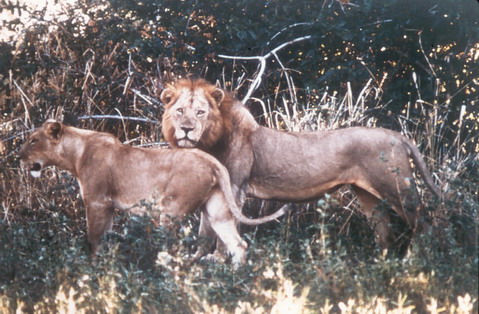
How to describe the "getting away from it all" when on safari?
Permit us to quote a great description of what it is like to soak up the experience of a stay in the Luangwa Valley - (link to original blog below):
Quote:
Two nights in Croc Valley
Croc Valley camp is called Croc Valley for good reason: located on the banks of the Luangwa River you can literally sit in a hammock, look out over the river and watch as the water spontaneously erupts into a thrashing of tails and teeth.
We were the only people staying at this luxurious camp (you can always tell a luxurious camp because the prices on the menu are quoted in USDs) so it was a fantastic opportunity to soak up the atmosphere of the national park that surrounded it. We were here for two nights so we had a whole day to wallow in the pool (deliberately shallow in case animals ever fall in), relax in hammocks and just sit and listen to the sounds of nature.
Every now and then the trumpeting of elephants nearby would drown out conversation; at night hippos brushed by our tents and hyenas cackled in the distance.
Sun rise here was spectacular. I woke up at 4.30am as the sun began to rise and watched as the sky became awash with rich oranges and reds. Captured on camera, the reflection of the sunrise in the river suggested the presence of two red suns.
As the sun rose, the national park came to life: vervet monkeys and olive baboons that frequented the camp awoke from slumber and began to clamber around the trees (or in the camp kitchen!) in search for food chattering as they went; birds burst into song, hippos grunted and guffawed and thirsty antelope came down to the river’s edge to drink.
Sitting there on a wooden bench overlooking the river contemplating U.L.E (universe, life, everything) I realized that I felt utterly stress free. Despite being homeless, jobless and pretty much penniless, I’m probably the happiest I’ve been in five years.
Unquote.
To read the original, go here.
Wednesday, December 2, 2009

Wednesday, November 25, 2009

Wednesday, November 4, 2009
Classic 10 Night South Luangwa Safari
This writer found the Luangwa Valley unforgettable - I was fortunate enough to experience it when Norman Carr himself was there.
At the Norman Carr Safaris' website you can find this suggestion:
60th Anniversary Celebration - Classic 10 night South Luangwa Safari with Norman Carr Safaris
Please note that all of our safari packages are tailor-made, this itinerary is just a suggestion and can be amended to better fit your requirements.
2 nights Kapani
2 nights Luwi Bushcamp
2 nights Nsolo Bushcamp
2 nights Kakuli Bushcamp
2 nights Mchenja Camp
This Classic South Luangwa Safari includes all the best that the South Luangwa has to offer. There is plenty of time to explore the amazing variety of habitat and species. Help us celebrate 60 years of safari excellence. Leading the way since 1950.
Norman Carr Safaris
At the Norman Carr Safaris' website you can find this suggestion:
60th Anniversary Celebration - Classic 10 night South Luangwa Safari with Norman Carr Safaris
Please note that all of our safari packages are tailor-made, this itinerary is just a suggestion and can be amended to better fit your requirements.
2 nights Kapani
2 nights Luwi Bushcamp
2 nights Nsolo Bushcamp
2 nights Kakuli Bushcamp
2 nights Mchenja Camp
This Classic South Luangwa Safari includes all the best that the South Luangwa has to offer. There is plenty of time to explore the amazing variety of habitat and species. Help us celebrate 60 years of safari excellence. Leading the way since 1950.
| Days 1 and 2 - Kapani Lodge | |
 Kapani Lagoon House You will be met at Lusaka Airport and escorted onto your domestic flight to Mfuwe. Your safari guide will meet you at Mfuwe Airport and drive you to Kapani Lodge in time to settle in before brunch. You will have the rest of the day to relax, until tea at about 3pm followed by the afternoon game drive. After sundowners, the night drive is a search for nocturnal species such as genet, civet, porcupine and honey-badger, rarely seen in daylight hours. This is the best chance of spotting leopard and lion when they are at their most active. Return to camp at around 7:30pm in time for dinner. | |
| Days 3 and 4 - Luwi Bushcamp | |
 Tea After two nights at Kapani you will be driven deep into the National Park to Luwi Bushcamp. Described as Africa’s last real bush camp, wonderfully rustic and authentic, Luwi is set in the shade of large trees close to a permanent lagoon. The four rooms at Luwi have dry grass walls and thatched roofs with en-suite bathrooms open to the trees and stars above. Your safari guide will introduce you to the armed escort scout who will accompany you on your first real walking safari. The guide will take time to point out the tracks and signs that he uses to interpret the bush. Your first night in the bushcamp is likely to be accompanied by the noises of animals around camp. When day breaks, your guide will interpret the calls that kept you awake as you head out together and pick up the fresh tracks of a pride of lion or investigate the alarm calls of the local troop of baboon. This is no nature trail - this is the real thing - you are tracking big game through the African bush, on foot like the first Luangwa pioneers. | |
| Days 5 and 6 - Nsolo Bushcamp | |
 Pool On the second morning at Luwi, head out from camp as you did on the previous day but this time your guide will walk you down the Luwi river course. Your destination is Nsolo, the second of your bushcamps. After a few hours gentle walking you will arrive into camp. A cool drink will be ready for you, brunch will be on the table and your bags will be in your room. Your home for the next two nights will be a raised deck with dry grass walls and a tall, cool thatched roof. Once more your en-suite bathroom is open to the sky above. | |
| Days 7 and 8 - Kakuli Bushcamp | |
 Different Species The next move takes you further down the Luwi River, again on foot or by 4x4 game viewer if you prefer, to its confluence with the main Luangwa River and to Kakuli Camp. This camp is tented and has stunning views along a stretch of the Luangwa that is home to over five hundred hippo. Each of the four large Mehru style tents has a spectacular river view. Much of the gameviewing is still on foot although there are more game viewing tracks in this area so it is possible to use vehicles and with a dense population of leopards in the area the night drives are usually most rewarding. | |
| Days 9 and 10 - Mchenja Camp | |
 Leopard A taste of luxury awaits you at Mchenja. The last of your camps is set under the shade of immense ebony trees. The four individually designed tents each have a bath inside as well as an open, en-suite shower and toilet. The main chitenje (lounge) houses a small plunge pool alongside the bar and sitting area and meals are usually taken on the river bank. | |
| Day 11 - Return | |
 Elephant Walk Last drive through the National Park as you transfer from Mchenja to Mfuwe Airport for your flight out of the valley. | |
Norman Carr Safaris
Wednesday, October 14, 2009
Top 10 safari destinations in Africa
One of the main reasons most travelers choose to visit Africa is her wildlife parks and conservancies. These are certainly the highlight of any African trip, and here is the BootsnAll top ten choice of African wildlife destinations.

Mana is unique because it is different. The park is situated on 2500 square kilometers on the south bank of the Zambezi River. The area is a mix of riverine habitat rich in crocodile and hippo, floodplains supporting large herds of herbivores and a back-country of low lying Mopane woodland interspersed with thousands of mature baobabs.
The diversity of wildlife and scenic interest is just one of the reasons why Mana Pools should be a tick on your map of southern African eco destinations.

Also of mixed habitat, the vortex of the park is a wet depression that supports a rich variety of vegetation that in turn provides succor and habitat to a huge diversity of wildlife. To the west lies Mount Gorongosa with its large number of endemics and unusual forest habitat. To the east wooded Miombo hill country offers shaded sanctuary to the more elusive of the African plains species.
Slowly being restocked, Gorongosa is still a work in progress, but is the focus of much international money and interest, and for the moment seems to have an assured future.

Covering an area of 4636 square kilometers of the river’s east bank, South Luangwa offers a mix of riverine and floodplain habitat with high cliffs and forested hilltops. The park supports excellent wildlife diversity and offers the option of walking safaris.
This park is fairly new to the circuit, but is easily accessible, well maintained and protected, and served with excellent lodge and camp hospitality options.

Kruger is an authentic bushveld destination with wooded savanna and acacia thornveld being the predominant habitats. This is also quintessential big game country where you can be justly disappointed if you do not regularly bump into the Big Five.
Easily accessible, well funded and managed, and exceptionally well and efficiently served with all the necessary amenities. This is a great option for beginners. It is civilized bundu-bashing in a developed-world atmosphere.

The better traveled region of the park is easily accessible and in a desert and semi-desert environment some of the signature scenery of Africa can be enjoyed from the deck of a luxury camp or lodge. Penetrate deeper into the wilderness and you can park your Landrover under a baobab and neither see or hear another human being for weeks.
A great option for enthusiasts, second timers and expedition junkies. Expect to see the Big Five with many other more localized or endemic species.

However the inevitable jostle at certain times of the years is compensated for by one of Africa’s most Eden-like landscapes replete with natural splendor. Masai Mara is large – some 25 000 square kilometers - and is composed mostly of open grasslands and plains. The justly famous East African hospitality industry reaches its zenith in places like the Masai Mara so expect some of the highest standards of luxury on the planet.
This is an all-comers national park with something for everyone. The Big Five are dominated here by lion and cheetah but you can hardly fail to run into the rest too. Altogether an accessible, well managed and protected national park with some of the best photographic potential in Africa.

Well managed, isolated and well protected this expanse of bushveld surrounding a seldom flooded pan enjoys unique ecological perspectives as well as all the best of African game safaris. The Namibians are excellent at long range 4×4 adventure, so for a little outlay an authentic African safari adventure is there for the taking.
Very wild and very real, this park is nonetheless easy to get to, easy to see and comfortable in the grand colonial tradition. Practical for all budgets. You can get the best and the most basic here.

This regional conservancy covers some 10 000 square kilometers of largely uninhabited territory dominated by the delta of the Mekrou River with the Niger River. It is broken by rocky hills and expanses of bushveld. Equally unexpected wildlife encounters are frequent here with one of the last surviving populations of West African elephant and rare West African giraffe. Also expect to see cheetah, Lion and leopard with possible sighting of African painted wild-dog. Besides this there are many antelope species. W-National Park is a sought after birding destination.
So all in all an unusual eco-travel option with a frontier feel since facilities are scarce and access tricky. It is worth the effort though as Africa’s number 3 option.

The Delta is not wholly protected and is technically an area of mixed usage. Human habitation is present but limited, and on the whole the region is given over to wildlife. The main area of national park is Moremi Game Reserve which links in the north with Chobe National Park. Both are among the most important eco-destinations in the region.
Both parks have a riverine/riparian aspect with access by dugout and other river-craft. With generally superb standards of game management throughout Botswana you can expect to see the best of the Big Five and much more besides.

The usual way to get the best of the Northern Circuit is a climb/safari packages that taxes your physical endurance and then soothes it with a relaxing safari among some of the greatest natural treasures in the world, and among some of the most esteemed representatives of the global hospitality industry.
In every respect the eco-travel potential in this region is superb. Although budget travel is not really encouraged, it is possible, but it is only when you dig deep in your pocket and spoil yourself with luxury that you will get the best that this region has to offer.
Features include the annual migration that takes place between the Masai Mara and the Serengeti every year. If you are lucky enough to catch this you will have witnessed one of the world’s greatest natural phenomenon.
http://www.adventurelogue.com/travelnews/top-10-safari-trips-destinations-in-africa.html
Saturday, September 19, 2009
Zambia safaris: Elephants, baboons and a walk on the wild side in stunning South Luangwa
A gentle voice outside the tent-flap murmurs: 'Morning, morning.' During the night, hyenas whooped and howled persistently, so close behind the camp that their mournful wails seemed to rattle the guy ropes and, from time to time, lions roared. But now, just before dawn, absolute silence reigns.

Trunk enthrall: Elephants and buffalo cross the Luangwa River in Zambia
Hot water has arrived in each washing bowl. Breakfast is ready on the riverbank: tea, coffee, porridge and toast, cooked over a fire of mopane wood, which gives the food a special tang. We eat quickly, on our feet, watching the eastern sky start to glow, until a huge ball of fiery crimson climbs over the horizon and sets the surface of the river alight.
By 6.15am we are on our way. 'Keep behind me in single file,' says our leader, Robin Pope. 'If anything starts to happen, stay bunched together. Don't run.'
Out front is our escort scout, Piela Nandila, armed with a loaded .375 rifle. Next comes Robin, then the six of us, and at the back our tea-carrier Jonathan Mbao, swinging a fearsome machete.
Read more: http://www.dailymail.co.uk/travel/article-1213066/Zambia-safaris-Elephants-baboons-walk-wild-stunning-South-Luangwa.html#ixzz0RbsQTEQd
Saturday, August 22, 2009
African Safari Destination – The Luangwa Valley, Zambia
A pristine river runs through the lush rift valley that is known as Luangwa National Park, Zambia. The Luangwa river is one of the major tributaries of the Zambezi River, and one of the four biggest rivers in Zambia. Surprisingly, it is largely unaffected by man – there is no commercial agriculture along its banks, no sections of the river have been dammed and there is little/no pollution problem. The result is a very natural and untouched river, deep in the African countryside where natural seasonal fluctuations of water (flooding through to the vision of crisp river bed in the dry season) can be witnessed together with teaming wildlife during an African adventure holiday.
The river is so natural that oxbow lakes are scattered across the valley from where the river course has changed with the floods. Over the years river side camps and lodges have had to move. Here the river is king!
It is said that the Luangwa River in Zambia is the most unaltered and significant river system in Africa and it certainly is the key ingredient that keeps all 9050km2 of the park with over 60 different animal species and over 400 different bird species alive.
A large quantity of game can be found here since Zambia remains largely untouched by the tourist rush. Water results in rich vegetation that feeds varying herbivore animals and herds including buffalo, elephant, puku, impala and the more rare subspecies of Thornicroft giraffe and Crawshay’s zebra that are found here. Healthy and large populations of herbivores feed predators like lion, hyenas and leopard. In fact a BBC documentary suggests an average density of one leopard per 2.5km2 – twice the density recorded in Kruger, South Africa.
The best time to see game is in the dry season from April to October. As the river dries up the animals visit the lagoons and oxbow lakes to drink more frequently. Seeing them here in their natural environment is breathtaking.
As short rain showers begin to fall in November most animals give birth to their young and since the grass is still short spectacular sightings of mothers and their young can be seen. The landscape begins to change from a golden brown, dusty and dry land to an emerald green – known as Zambia’s green season.
Zambia’s Luangwa River also means that the valley can boast very rich populations of tropical bird life, including birds that live close to water and birds that prefer drier habitats in the forests and on the plains. The best time to see these birds is in the rainy season (November to March) since the rain provides abundant food supplies for them. Summer migrants are also present in the Luangwa valley at this time. Flocks of birds can be noted and a special site is a breeding colony of yellow-billed storks with their pink breeding plumage. The rain does not fall consistently and rarely lasts for more than a few hours, so you can still enjoy game drives and birding to the full.
In April and May, the rains will have stopped and the landscape begins to dry out. The Luangwa rivers water level begins to drop and sandbanks (the signature of the Luangwa River) are exposed. Once drenched roads begin to dry out and the main safari season beings once more. As the lush green grass begins to turn golden brown one truly understands the Luangwa River really is the life blood of this untouched landscape in the Luangwa National Park, Zambia.
Note: If you wish to publish this article on your website, blog, etc. you can as long as the article remains in its full entirety; including the links and the author resource box.
Sara Brown is instrumental in the running of the Best of Zambia site (http://www.thebestofzambia.com/), a website dedicated to putting Zambia on the map by creating a strong internet presence and successfully promoting Zambia and those operating in Zambia. This site will help potential visitors to Zambia reasearch this beautiful country, find the perfect holiday in Zambia, plan their trip and send out enquiries. As the site develops it will have useful links to the international development sector, commercial and investment opportunities and, local businesses and services.
Our mission is to ensure the Best of Zambia site becomes THE information hub for all things Zambia. You can learn more about the Best of Zambia and how you can benefit from our products and services at our constantly updated website, http://www.thebestofzambia.com/
Zambia is stunning and tourism is increasing. Despite this many would prefer Zambia to stay exactly as it is – a place that is fascinating, a rich resource of natural habitat and animals that few other people visit. As we promote Zambia, we ask that you respect its resources and people and help to preserve it – be a thoughtful visitor.
Article Source: http://EzineArticles.com/?expert=Sara_Brown
The river is so natural that oxbow lakes are scattered across the valley from where the river course has changed with the floods. Over the years river side camps and lodges have had to move. Here the river is king!
It is said that the Luangwa River in Zambia is the most unaltered and significant river system in Africa and it certainly is the key ingredient that keeps all 9050km2 of the park with over 60 different animal species and over 400 different bird species alive.
A large quantity of game can be found here since Zambia remains largely untouched by the tourist rush. Water results in rich vegetation that feeds varying herbivore animals and herds including buffalo, elephant, puku, impala and the more rare subspecies of Thornicroft giraffe and Crawshay’s zebra that are found here. Healthy and large populations of herbivores feed predators like lion, hyenas and leopard. In fact a BBC documentary suggests an average density of one leopard per 2.5km2 – twice the density recorded in Kruger, South Africa.
The best time to see game is in the dry season from April to October. As the river dries up the animals visit the lagoons and oxbow lakes to drink more frequently. Seeing them here in their natural environment is breathtaking.
As short rain showers begin to fall in November most animals give birth to their young and since the grass is still short spectacular sightings of mothers and their young can be seen. The landscape begins to change from a golden brown, dusty and dry land to an emerald green – known as Zambia’s green season.
Zambia’s Luangwa River also means that the valley can boast very rich populations of tropical bird life, including birds that live close to water and birds that prefer drier habitats in the forests and on the plains. The best time to see these birds is in the rainy season (November to March) since the rain provides abundant food supplies for them. Summer migrants are also present in the Luangwa valley at this time. Flocks of birds can be noted and a special site is a breeding colony of yellow-billed storks with their pink breeding plumage. The rain does not fall consistently and rarely lasts for more than a few hours, so you can still enjoy game drives and birding to the full.
In April and May, the rains will have stopped and the landscape begins to dry out. The Luangwa rivers water level begins to drop and sandbanks (the signature of the Luangwa River) are exposed. Once drenched roads begin to dry out and the main safari season beings once more. As the lush green grass begins to turn golden brown one truly understands the Luangwa River really is the life blood of this untouched landscape in the Luangwa National Park, Zambia.
Note: If you wish to publish this article on your website, blog, etc. you can as long as the article remains in its full entirety; including the links and the author resource box.
Sara Brown is instrumental in the running of the Best of Zambia site (http://www.thebestofzambia.com/), a website dedicated to putting Zambia on the map by creating a strong internet presence and successfully promoting Zambia and those operating in Zambia. This site will help potential visitors to Zambia reasearch this beautiful country, find the perfect holiday in Zambia, plan their trip and send out enquiries. As the site develops it will have useful links to the international development sector, commercial and investment opportunities and, local businesses and services.
Our mission is to ensure the Best of Zambia site becomes THE information hub for all things Zambia. You can learn more about the Best of Zambia and how you can benefit from our products and services at our constantly updated website, http://www.thebestofzambia.com/
Zambia is stunning and tourism is increasing. Despite this many would prefer Zambia to stay exactly as it is – a place that is fascinating, a rich resource of natural habitat and animals that few other people visit. As we promote Zambia, we ask that you respect its resources and people and help to preserve it – be a thoughtful visitor.
Article Source: http://EzineArticles.com/?expert=Sara_Brown
Monday, August 10, 2009
A Zambian safari in the sky
A remote safari lodge in Africa has come up with a novel way of tracking animals - by microlight.
Matt Carroll gets a bird's-eye view
Matt Carroll gets really off road in Zambia with an airborne safari experience
I've never really had much luck with safaris. Ever since I first went on one to South Africa six years ago and found a scorpion in my bed, things have never quite gone according to plan.
http://www.guardian.co.uk/travel/video/2009/aug/09/zambia-microlite-safari
Matt Carroll gets a bird's-eye view
Matt Carroll gets really off road in Zambia with an airborne safari experience
I've never really had much luck with safaris. Ever since I first went on one to South Africa six years ago and found a scorpion in my bed, things have never quite gone according to plan.
http://www.guardian.co.uk/travel/video/2009/aug/09/zambia-microlite-safari
Subscribe to:
Posts (Atom)